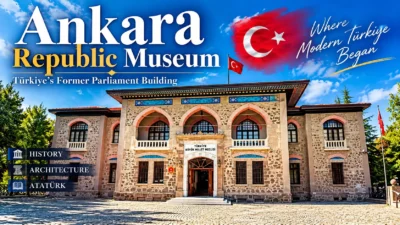
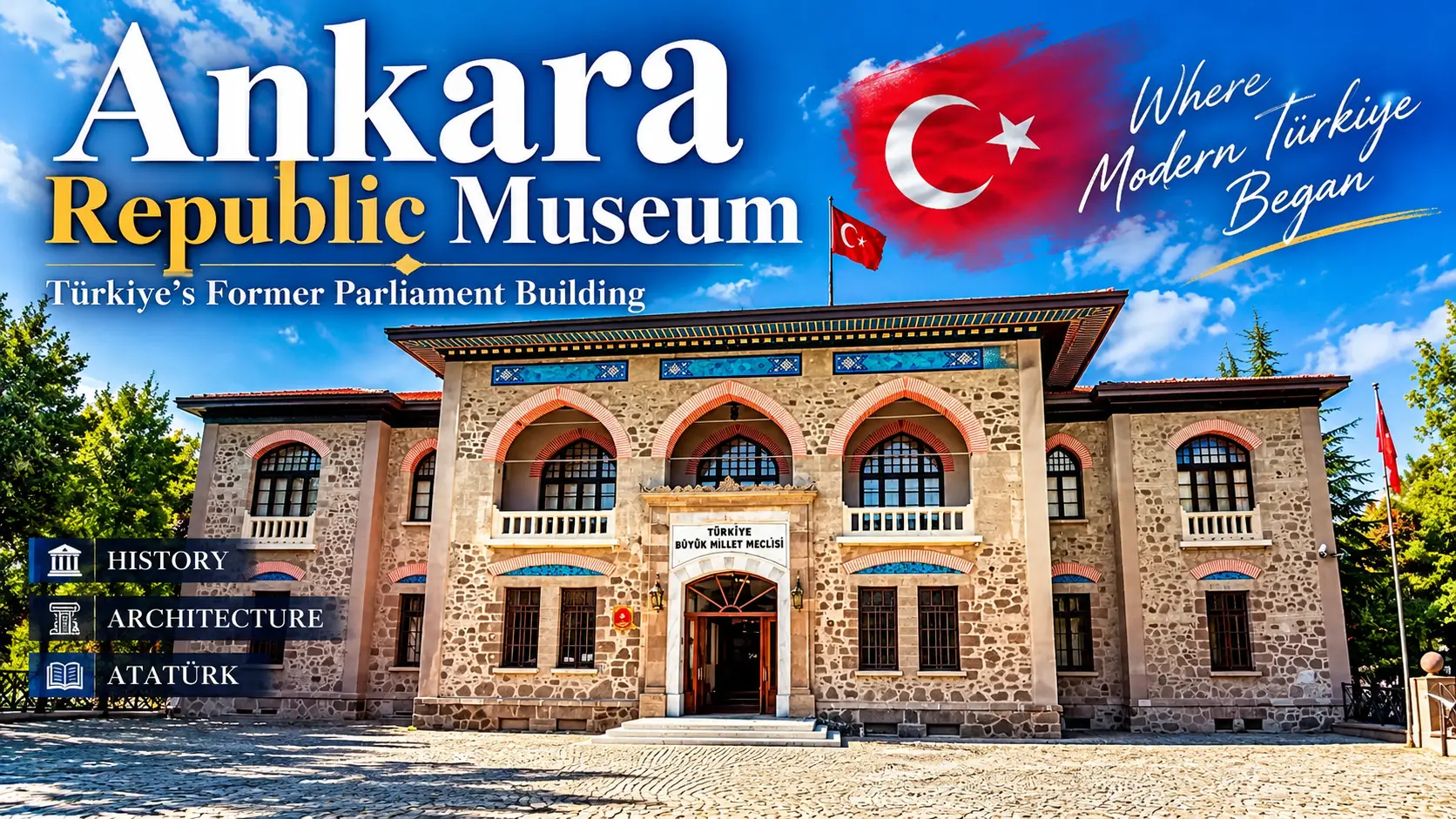
The Ankara Republic Museum occupies a building that looks relatively restrained from the street. Inside, the experience is different: a large parliamentary chamber, richly decorated ceilings, chandeliers, historic furniture and displays connected with the early Turkish Republic.
I visited on a weekday afternoon in September 2026, arriving at around 3 p.m. after taking the metro to Ulus. I expected a historically important building. What stayed with me was the scale of the assembly hall and how much detail there was to look at beyond it. I spent about two hours here, considerably more than a quick stop for a photograph.
This is the former Second Grand National Assembly building, where Türkiye’s parliament met from 1924 to 1960. It is especially rewarding for travelers who want to understand the early Republic through the rooms where its political life unfolded, rather than through dates alone.
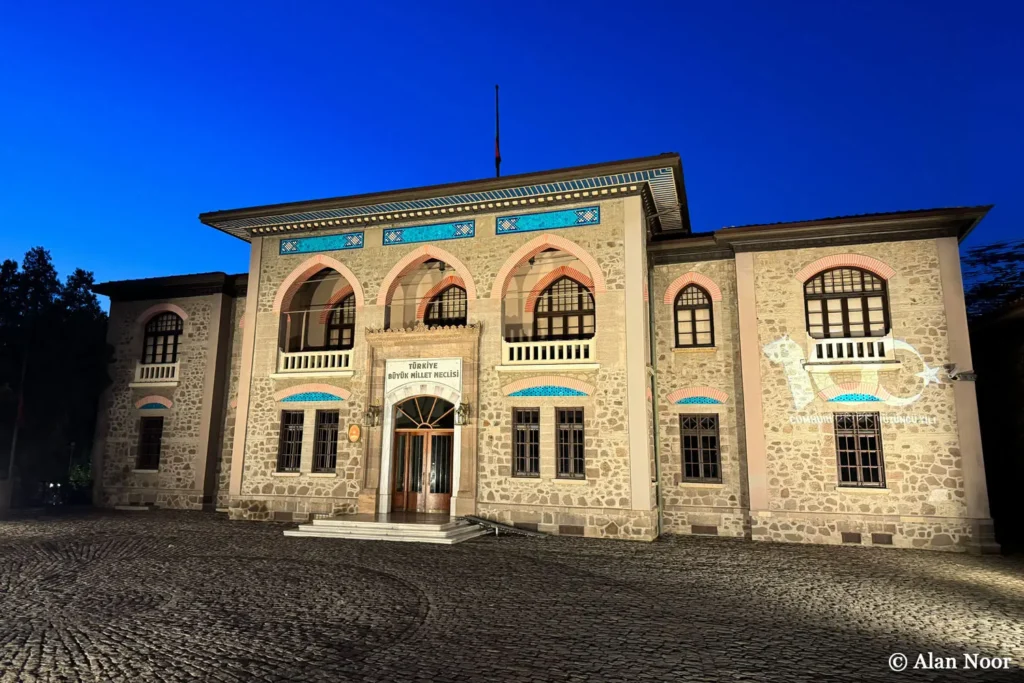
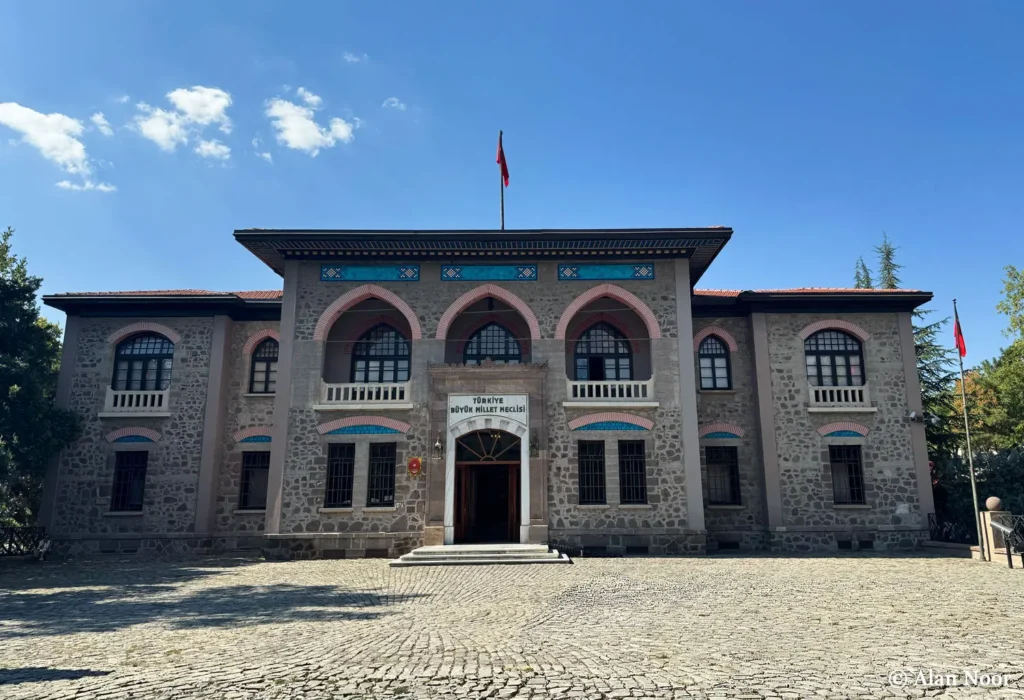
The façade is worth examining before you enter: its three central arches, masonry, broad roofline and turquoise decorative panels offer a useful contrast with the grand rooms inside. My photographs also show the building illuminated against the evening sky; that is a photographic view, not a promise that the museum is open at night.
Is the Ankara Republic Museum worth visiting?
For anyone interested in Atatürk, the founding decades of the Republic or historic interiors, I would give this museum a high priority during a visit to central Ankara. Its strongest attraction is the chance to see the former parliamentary chamber in its architectural setting. The surrounding rooms and objects add texture to that central experience.
If your time in Ankara is limited and you have little interest in political history, it may be a lower priority than a broader introduction to the city. The visit is largely about understanding a historic building and interpreting displays, not about panoramic views or outdoor sightseeing.
A practical decision: allow about an hour if you mainly want to see the chamber and principal rooms; consider up to two hours if you enjoy reading exhibits and examining the interiors. These are planning suggestions, not official tour durations. My own visit took approximately two hours. I would combine it with the nearby War of Independence Museum (the First Parliament Building) if I wanted to understand the two buildings as a pair.
What you will see inside
The historic assembly chamber
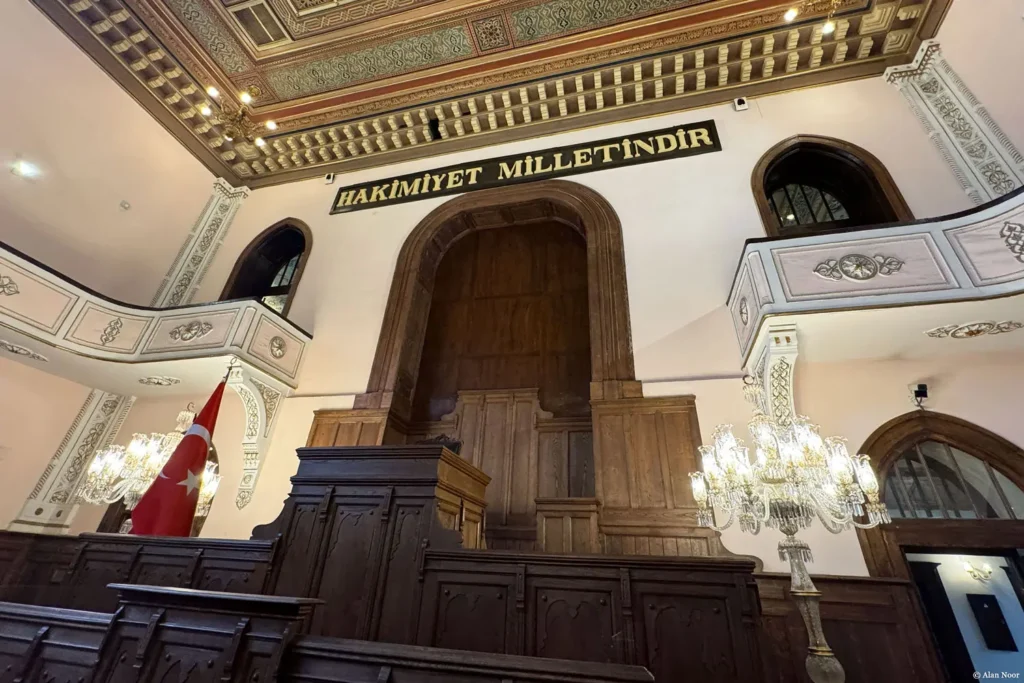
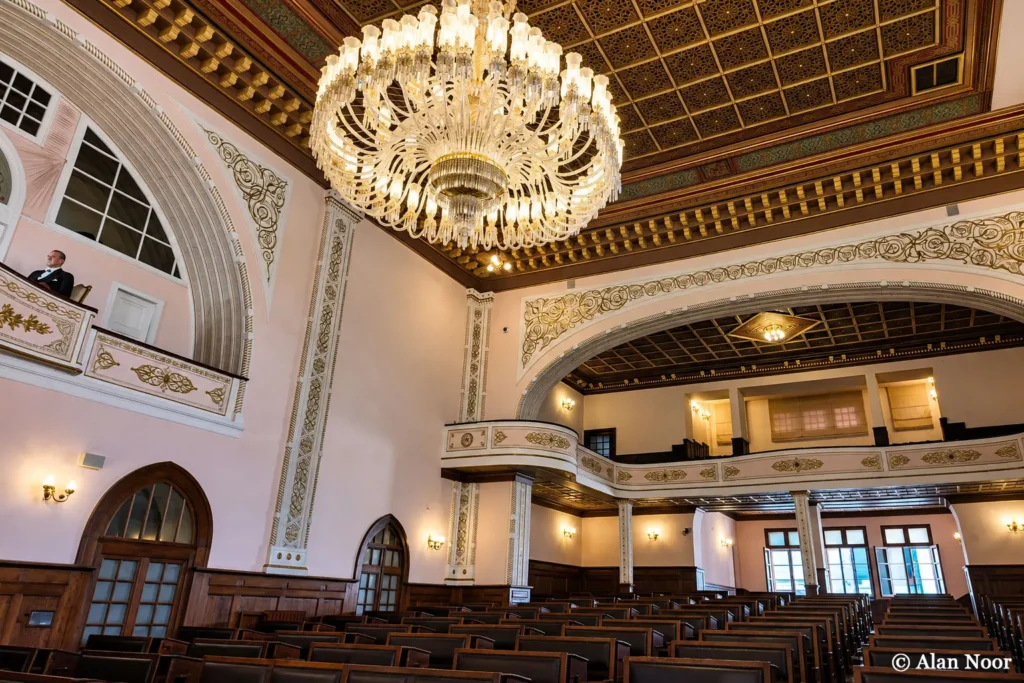
The assembly chamber is the main reason I would recommend visiting. Rows of wooden seats face a raised speaking area, while decorative arches, an upper gallery and substantial chandeliers give the room a sense of occasion. Photographs can show the layout, but for me they did not fully convey how spacious the chamber feels when standing inside.
Look first at the relationship between the deputies’ seating, the central speaking area and the gallery above. Then look upward: the ceiling and lighting are part of the experience, not merely background decoration. This former parliamentary space is now presented as part of a history museum.
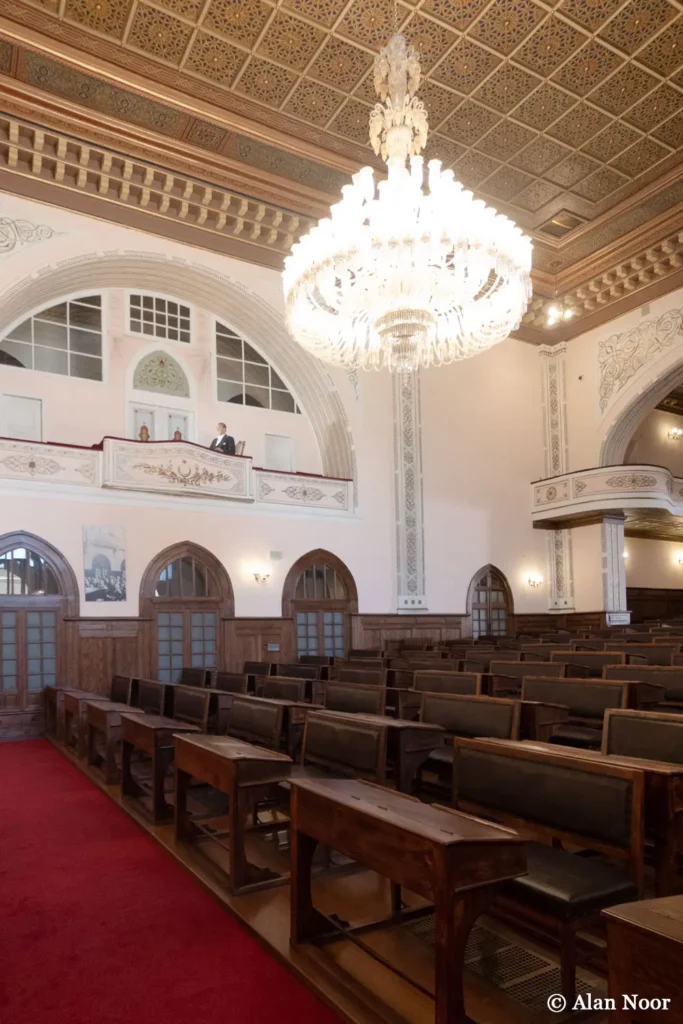
From the floor, the chamber can be read in layers. The rows of dark wooden benches show how the deputies were arranged. The raised speaking position draws the eye toward the front of the room. Above the seating, the galleries provide another perspective on the hall, while the large arches and patterned ceiling frame the entire space.
The chandelier is visually dominant, but it is worth photographing the benches and upper gallery together: the contrast between the practical furniture and elaborate decoration is one of the room’s most distinctive qualities. Look for the motto Hâkimiyet Milletindir (“Sovereignty belongs to the nation”) above the main speaking area.
Ceilings, chandeliers and reception rooms
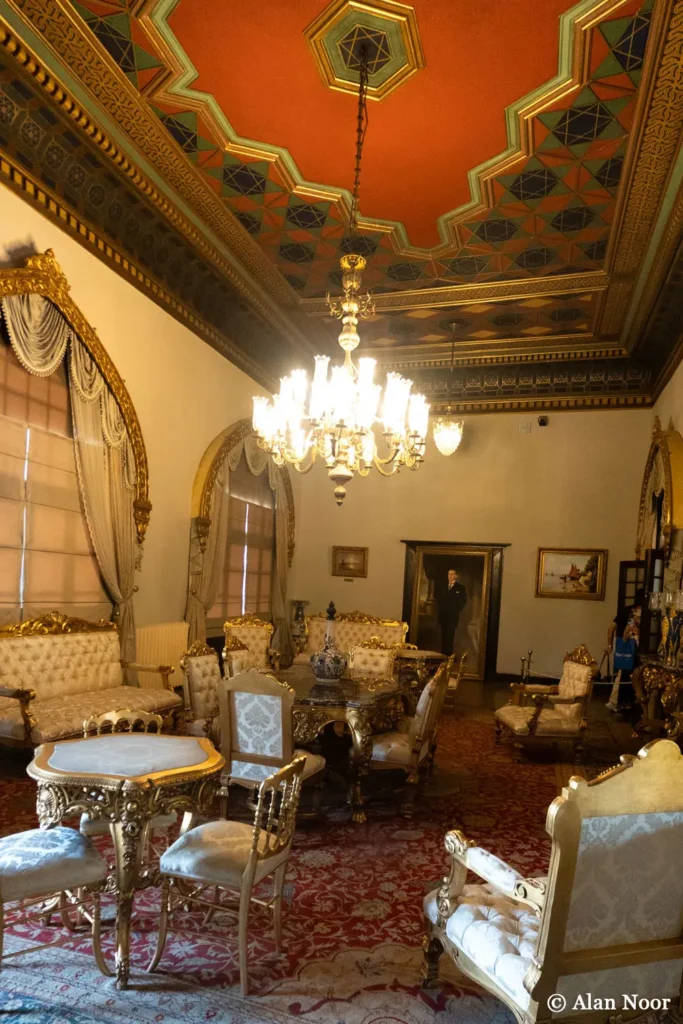
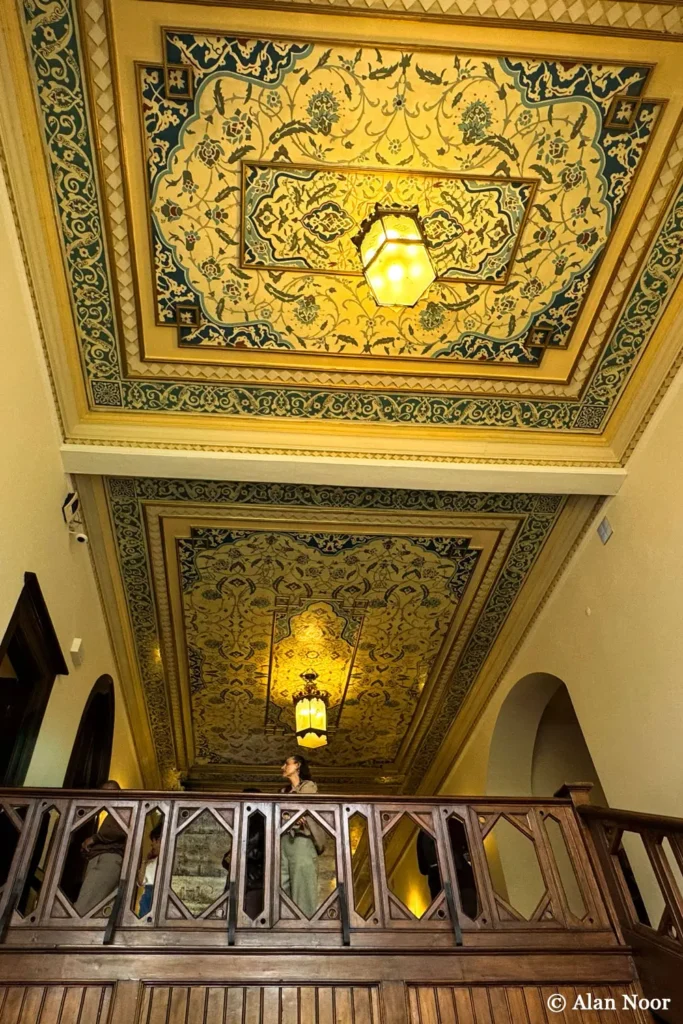
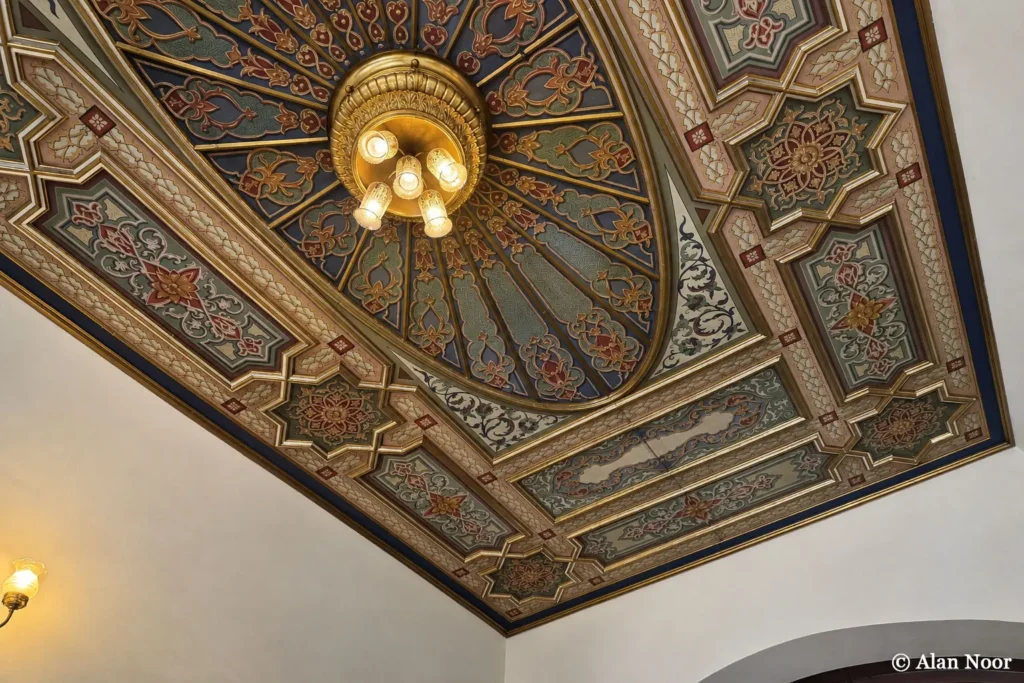
Do not rush from the chamber straight to the exit. Some of the most memorable details are overhead and in the adjoining interiors. I was struck by the patterned ceilings, ornate chandeliers, richly furnished reception rooms and the contrast between these elaborate spaces and the building’s comparatively modest street presence.
Several rooms have upholstered chairs, patterned carpets, framed portraits and carefully arranged furniture. Rather than treating every room as a separate attraction, pay attention to the recurring visual language: decorated ceilings, arches, textiles and lighting. These features help explain why the building feels both institutional and ceremonial.
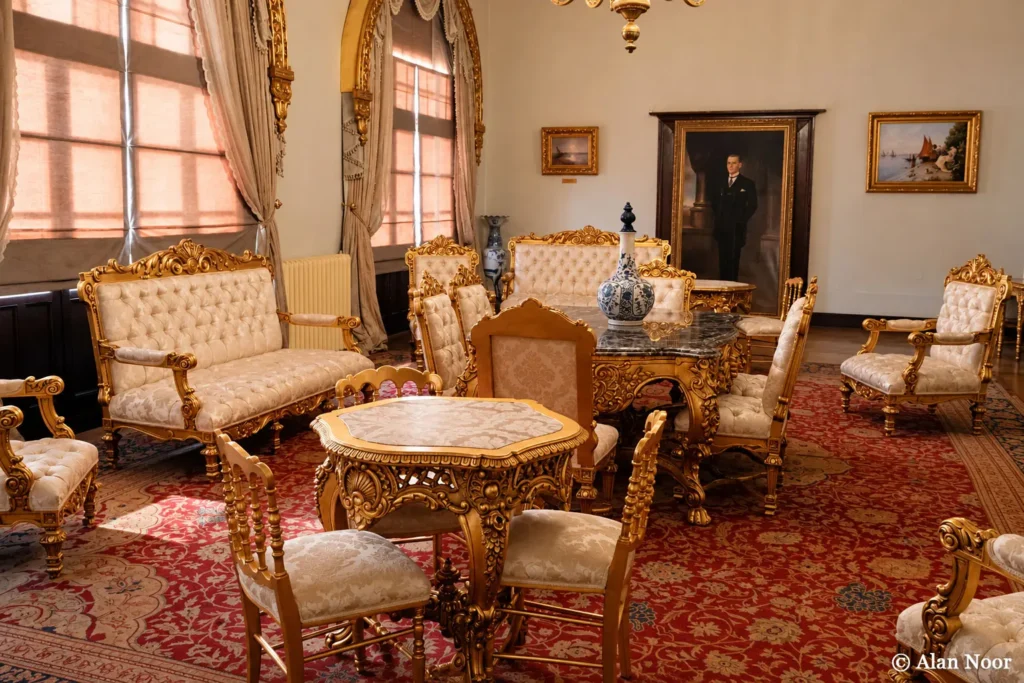
The reception room shown in my photographs has cream upholstery, gilded furniture, a red patterned carpet and a large hanging light. Looking closely at the arrangement helps visitors see a different side of the building: parliamentary life involved formal rooms as well as the debating chamber. The museum’s room labels provide the best guide to the original use and ownership of individual pieces.
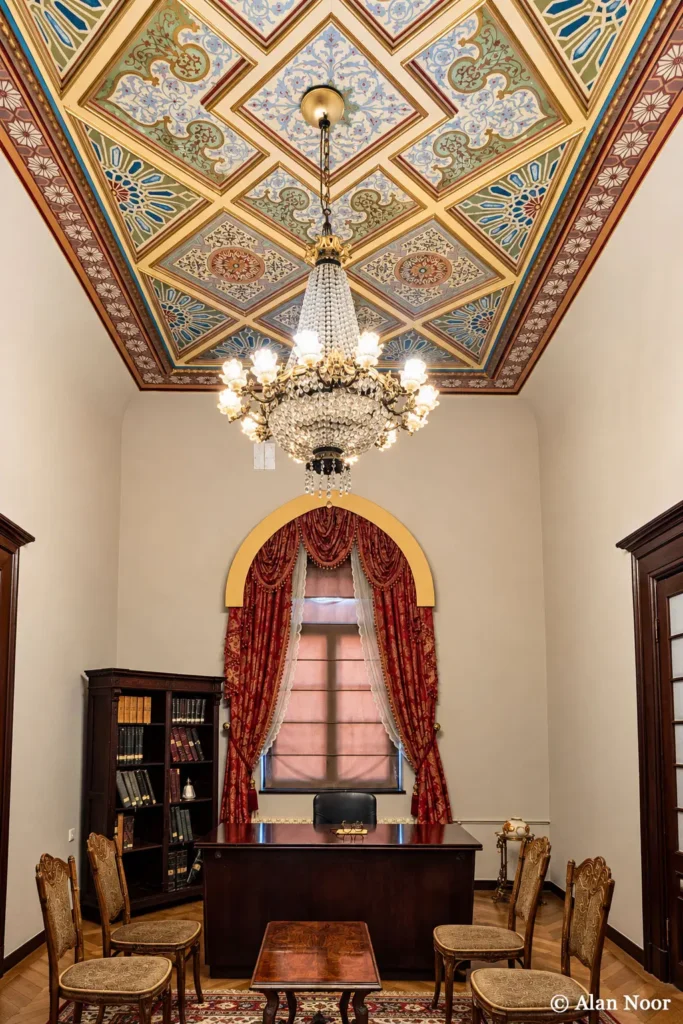
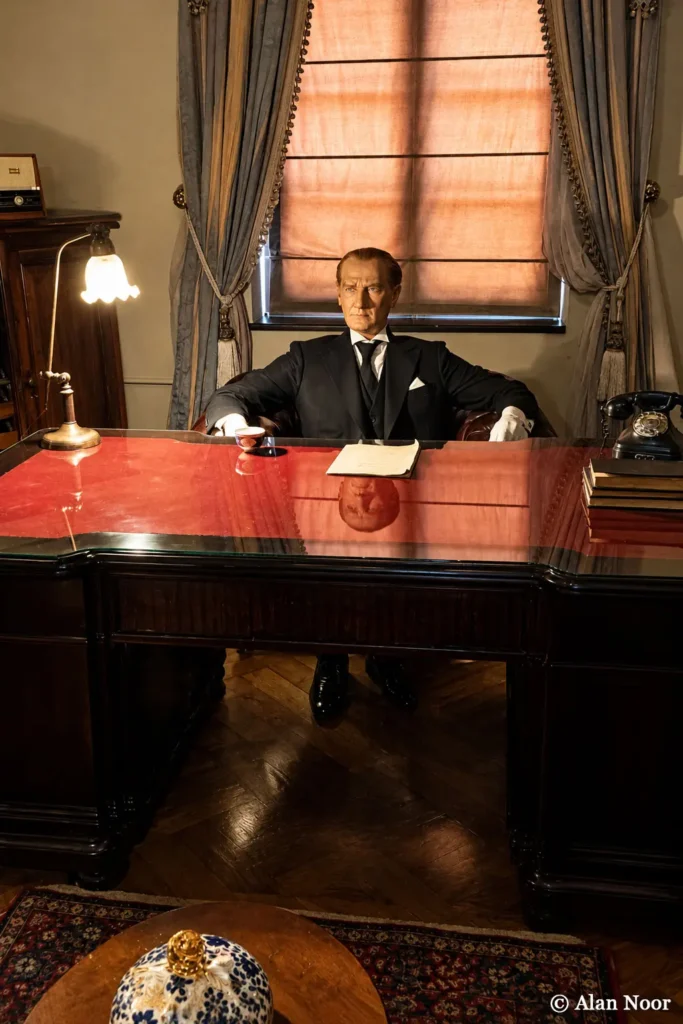
Another photograph shows a smaller office-like room with a desk, bookcase, chairs and a striking painted ceiling. It is one of the period-style rooms presented in the museum, with its historical occupant not identified here.
Objects, documents and early-Republic displays
The museum also presents historical objects and documents that move the visit beyond architecture. In the photographed displays are period clothing, writing equipment, personal-looking objects, documents and a historic Turkish flag. Such objects make the political period feel more tangible, but their precise ownership and dates should be taken from the museum’s labels rather than inferred from appearance.
The exhibitions include material associated with the Republic’s first three presidents: Mustafa Kemal Atatürk, İsmet İnönü and Celal Bayar. If a particular object catches your attention, take time to read its label; the difference between a general period object and an item linked to a named historical figure matters.
The first three presidents: a useful way to read the galleries
As you move through the displays, three names provide a helpful framework. Mustafa Kemal Atatürk was the Republic’s first president and is central to the founding period. İsmet İnönü, the second president, is associated with the next phase of republican government. Celal Bayar, the third president, connects the museum’s story with the later decades in which this building remained the parliamentary seat. The museum’s exhibitions address these figures, but visitors should use the actual gallery labels to identify which specific objects belong to whom.
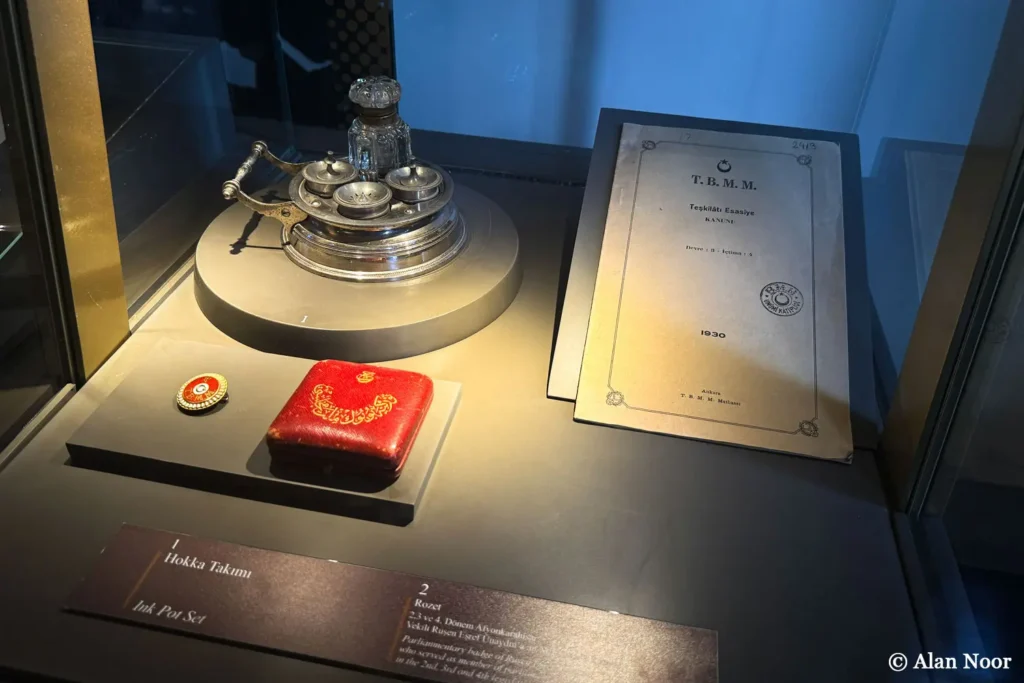
A 1930 parliamentary document and writing set
One of my display-case photographs shows a metal writing set, a red case or pouch, a rosette and a printed booklet marked T.B.M.M. and Teşkilâtı Esasiye Kanunu, with the year 1930 visible on its cover. The title refers to the constitutional law of the Turkish Grand National Assembly. This is an especially interesting stop because it turns the abstract idea of constitutional government into a physical printed object. The visible date identifies the booklet edition shown, not necessarily the date when the constitutional law was first adopted. The display photograph does not establish the writing set’s ownership or provenance.
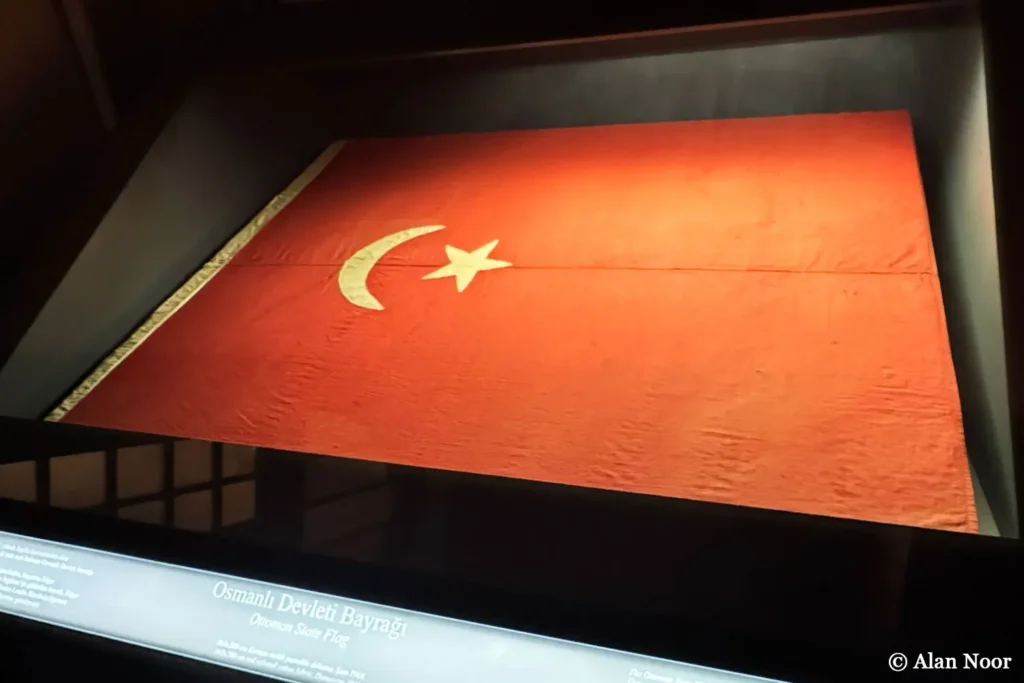
The Ottoman state flag: a link to the period before the Republic
Another display is explicitly labelled Osmanlı Devleti Bayrağı (“Ottoman State Flag”). The red textile with a crescent and star offers a visual link to the Ottoman past and the political transition that preceded the Republic. The photograph establishes how the object is labelled in the gallery; it does not establish the flag’s exact date, maker or historical use.
Why the Second Parliament Building matters
Parliament in this building, 1924–1960
According to the official Turkish Museums history, the building began parliamentary use on 18 October 1924 and served as the seat of the Grand National Assembly until 27 May 1960. Those dates place it at the heart of the Republic’s formative decades. Its historical importance is not simply that politicians met here: this was a setting in which national debates and decisions took place during a period of profound institutional and social change.
The building later had other uses before becoming the Republic Museum. Today, visitors can encounter the parliamentary space itself while learning about the political figures and documents associated with that era.

A short timeline of the building
1924: The building entered service as the Grand National Assembly’s second home on 18 October. 1927: Atatürk delivered his famous Nutuk speech in the parliamentary setting. 1960: Parliamentary use of this building ended on 27 May. Later: The building was repurposed before opening as a museum.
Atatürk’s Great Speech, Nutuk
An important event associated with the building is Mustafa Kemal Atatürk’s delivery of Nutuk, commonly called the Great Speech, in October 1927, as documented in official historical sources. Knowing this before entering the chamber changes how you look at the room: it becomes more than an attractive interior. You are looking at the setting of an important address about the national struggle and the establishment of the Republic.
For visitors unfamiliar with Turkish history, even a short introduction to the War of Independence, the proclamation of the Republic in 1923 and Atatürk’s role as its first president will make the exhibits easier to understand. There is no need to master the entire period before arriving.
Architecture: tradition within a new republic
According to the official Turkish Museums history, the building was designed by Vedat Tek and is associated with the First National Architectural Movement. Its stone exterior, projecting eaves, arches and ornamental surfaces draw on architectural traditions familiar from Ottoman and Seljuk design. The interiors make those influences especially visible in painted ceilings and decorative details.
Instead of trying to identify every motif, compare the exterior and interior. The façade announces a public institution; the assembly chamber and reception rooms reveal how much craftsmanship was invested in the spaces within.
A practical room-by-room approach
Suggested order: Begin with the main chamber while you are fresh, then inspect the rostrum and upper galleries from permitted viewing areas. Continue through the presidential and historical-document exhibitions, then take time in the reception and office-style rooms. Finish by looking closely at the ceilings, stairs and architectural details. Follow the museum’s actual visitor route and any restricted-area signs; this is a thematic recommendation rather than a verified room-by-room walking route.
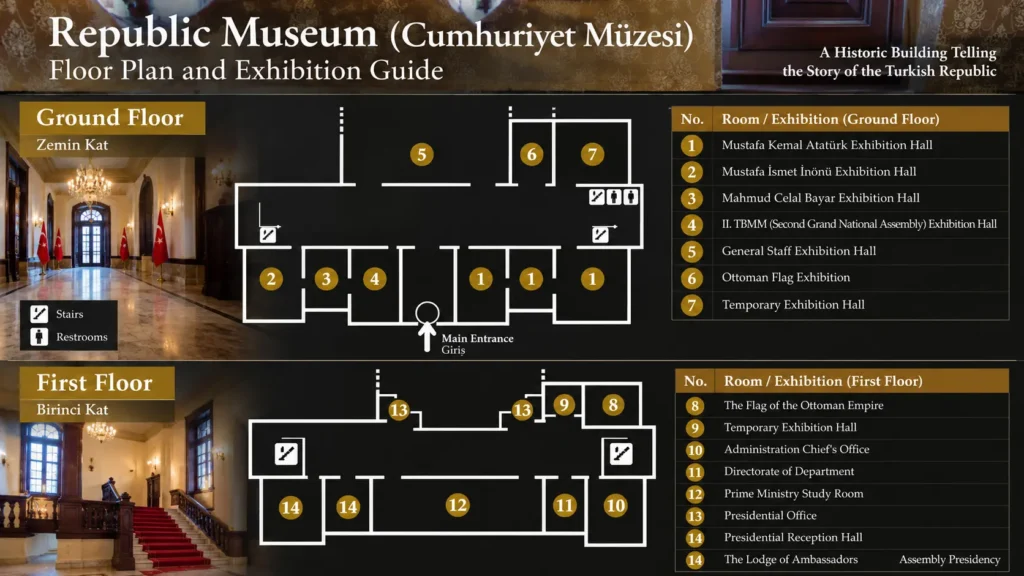
Photo tips from my visits
For a broad view of the assembly chamber, use a horizontal composition that includes both the wooden benches and the upper gallery. For the chandelier and decorated ceiling, a vertical photograph conveys the height more effectively. The façade works well as a centered, symmetrical view in daylight, while evening lighting gives the stonework a different appearance. In the display cases, move slightly to one side to reduce reflections, but do not touch the glass or cross barriers. Check the museum’s current photography rules before using flash or additional equipment.
My visit: what surprised me and what I would change
I arrived alone on a sunny weekday in September 2026, at approximately 3 p.m. The photographs illustrating this guide were taken on multiple visits. From Ulus metro station, the walk to the museum took me around five minutes. That is my experience of the final walk, not a guaranteed journey time from every station exit.
The surprise was the interior. From outside, I had not expected the chamber to feel so large. Inside, the rows of seating, elevated galleries and ceiling details made it worthwhile to stop and look rather than simply walk through. I also enjoyed the furnished rooms and the displays connected with Atatürk and the people around the early Republic.
One limitation was the arrival of visiting groups. At certain moments, their presence made the interior feel busier and reduced the chance to examine things quietly. That does not prove the museum is always crowded at that hour, or that weekends are necessarily worse. It is simply what I experienced on my visit.
If I returned, I would try arriving earlier in the day. That is a personal preference based on wanting a quieter look, not a verified claim that mornings are always less crowded. I would also spend time with the exhibit explanations rather than concentrating only on photographing the chamber.
Planning your visit: tickets, hours and getting there
Where it is and how to arrive
The museum is in Ulus, the historic center of Ankara, in the former Second Parliament Building. I used the Ankara metro and walked from Ulus station. For me, that final walk was roughly five minutes. Check your preferred map application for the current station exit and walking directions rather than treating my route as a measured universal distance.
Admission and museum passes
The official Turkish Museums listing, checked on 26 October 2026, gives admission as €6 for non-Turkish visitors aged eight and over and 200 TL for the Turkish adult category. It lists free admission for several categories, including children under eight who are non-Turkish citizens and eligible Turkish citizens. The page does not itself establish that every visitor can use MüzeKart; check the pass conditions for your nationality and status separately. These are dated prices, not guaranteed future charges. Confirm the latest ticket category before visiting. [Official source: https://turkishmuseums.com/museum/detail/1941-ankara-museum-of-the-republic/1941/4]
Official museum information and online ticketing: https://muze.gov.tr/muze-detay?SectionId=CUM01&DistId=MRK
Opening hours: check the official listing before leaving
The official Turkish Museums listing, checked on 26 October 2026, gives summer opening hours (1 May–1 October) as 09:00–19:00, with the box office closing at 18:45. Winter hours (1 October–1 May) are 09:00–17:00, with ticket sales ending at 16:45. The listing also shows Saturday and Sunday hours. Other government listings have previously shown different schedules, so check the official museum page shortly before your visit, especially around seasonal changes or holidays. [Official source: https://turkishmuseums.com/museum/detail/1941-ankara-museum-of-the-republic/1941/4]
Stairs, accessibility and photography
The museum includes interior stairs and more than one level, as shown in the original photographs. This is useful to know if stairs are difficult for you, but it does not establish whether there is a fully accessible alternative route. Visitors who need step-free access should contact the museum before visiting and ask about the exact route to the rooms they want to see.
I took photographs during my visit, but that does not establish the current rules for flash, tripods, video or commercial filming. Check posted instructions or ask staff before using specialist equipment. I also noticed a toilet inside the building during my visit; its present availability and accessible facilities should be confirmed on arrival.
First Parliament Museum or Second Parliament Museum?
These are two different historic buildings, and seeing both gives more context than treating them as interchangeable stops. The War of Independence Museum occupies the First Parliament Building and relates especially to the national struggle and the earliest parliamentary period. The Republic Museum is the Second Parliament Building, associated with parliamentary life from 1924 to 1960.
If you can visit only one, choose according to your interests: the First Parliament Museum for the beginnings of the assembly and the independence period; the Second Parliament Museum for the later historic chamber, ornate interiors and the development of the early Republic. If you have the time and interest, I recommend seeing both.
Quick comparison of the two parliament museums
| Question | First Parliament / War of Independence Museum | Second Parliament / Republic Museum |
|---|---|---|
| Core period | National struggle and earliest assembly years | Parliamentary life, 1924–1960 |
| Best reason to visit | Understand the beginnings of the national assembly | See the grand chamber, decorated interiors and early-Republic exhibits |
| My recommendation | Start here for the historical background | Continue here to see how the institution developed |
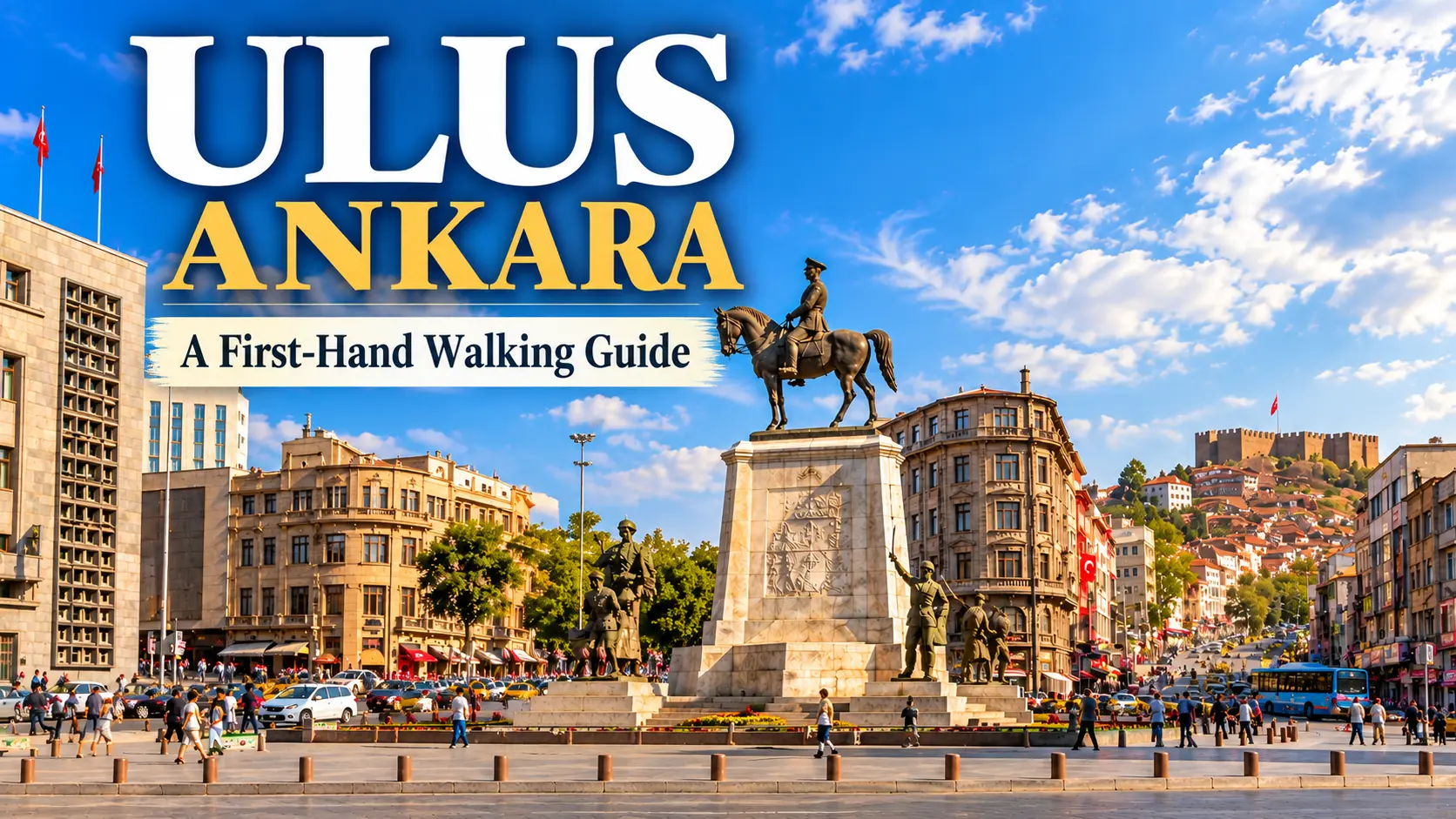
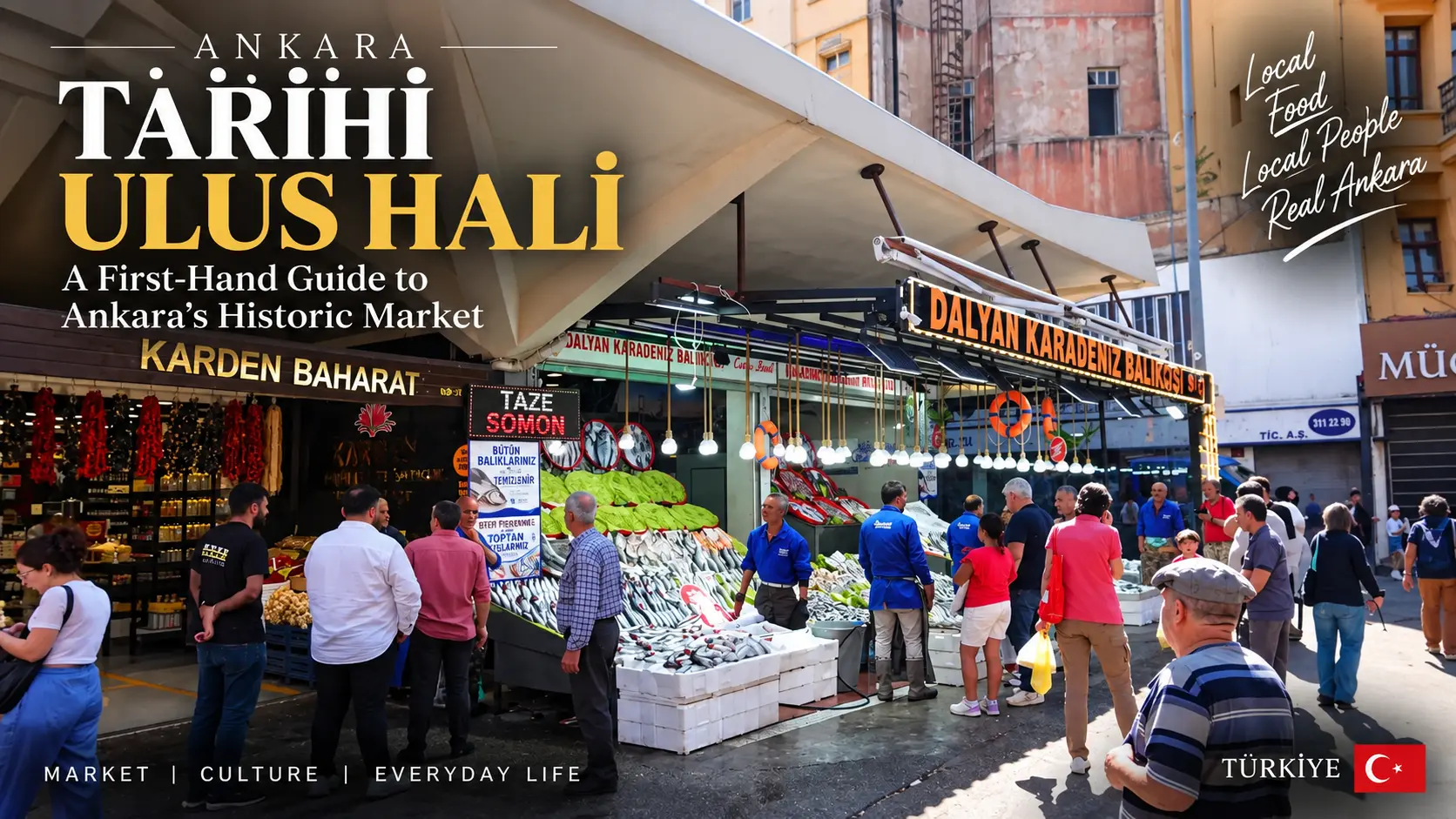
I have also visited Ulus market and Ankara Castle. They offer different experiences from the museum: everyday commercial life and a wider sense of the historic city. For planning a longer walk through the district, see my Ulus guide. If you want to continue uphill into the old city, my Ankara Castle guide provides a separate introduction. These are suggestions for combining places, not a claim that I followed one fixed route on the same day.
A sensible way to spend your time
If you have about an hour, make the assembly chamber your priority, then look at the ceiling and one or two rooms or exhibition cases that interest you. Avoid trying to read every label.
With about two hours, you can take a more deliberate approach: see the chamber, examine the architectural details, then work through the displays and reception rooms at your own pace. That is closer to how I experienced the museum.
If you have half a day in Ulus, consider pairing the Second Parliament Building with the First Parliament Museum and a walk through the surrounding historic district. Allow extra time for your interests, breaks and any group visits. Check each site’s opening information separately; a half-day plan is an editorial suggestion, not a timed official itinerary.

Frequently asked questions
- How long do you need at the Republic Museum in Ankara?
-
My visit lasted about two hours. Around an hour may suit a focused visit to the chamber and principal rooms; allow longer if you want to study the displays carefully.
- Is the Republic Museum the same as the War of Independence Museum?
-
No. The Republic Museum is the former Second Parliament Building. The War of Independence Museum is the former First Parliament Building. They cover connected but distinct periods.
- Can you take photographs inside?
-
I photographed the interior on my visit, but current restrictions on flash, tripods, video and commercial filming were not verified. Follow on-site signs and staff guidance.
- Is the museum wheelchair accessible?
-
The photographs show stairs and multiple levels, but they do not establish the available accessible routes. Contact the museum to confirm the entrance and access to particular rooms before visiting.
Final verdict
The Ankara Republic Museum is worth prioritizing if you want to understand the early Turkish Republic through a real parliamentary setting. For me, the strongest reason to go was the chamber’s unexpected sense of space, followed by the decorated rooms and historical displays. The main drawback during my visit was occasional congestion from groups. Allow about one to two hours depending on your interests, and, if possible, pair it with the First Parliament Museum. Visitors who are not interested in political history may reasonably choose other Ankara attractions first.
A story inspired by Türkiye
Beyond the Museum: Discover Barış & Noah

Ankara’s Republic Museum offers a glimpse into the city’s history. If you enjoy discovering the stories behind places in Türkiye, you might also enjoy Barış & Noah—an original serialized adventure about friendship, discovery and unexpected journeys.
Their story begins in Ankara. Start with Episode 1 and explore a different side of the city through fiction.
Official sources
- Turkish Museums – Republic Museum (museum history, seasonal hours, ticket prices and contact details; checked 26 October 2026).
- Turkish Ministry of Culture and Tourism – Republic Museum (historical information).
- Republic Museum – Official Museum and Ticketing Information (museum operations and ticketing).
For current operating hours, consult the official museum listing before visiting.