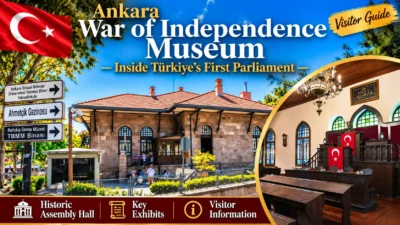
The first thing that surprised me about Ankara’s War of Independence Museum was its size.
I had seen photographs of the historic parliamentary chamber before visiting, but the building felt smaller in person than I had imagined. Standing in front of its wooden benches and speaker’s platform, I found it remarkable that a place of such modest proportions had played such an important role in Türkiye’s history.
I visited the museum twice in 2026, first on 5 September and again in October. The General Assembly Hall left the strongest impression on me during those visits.
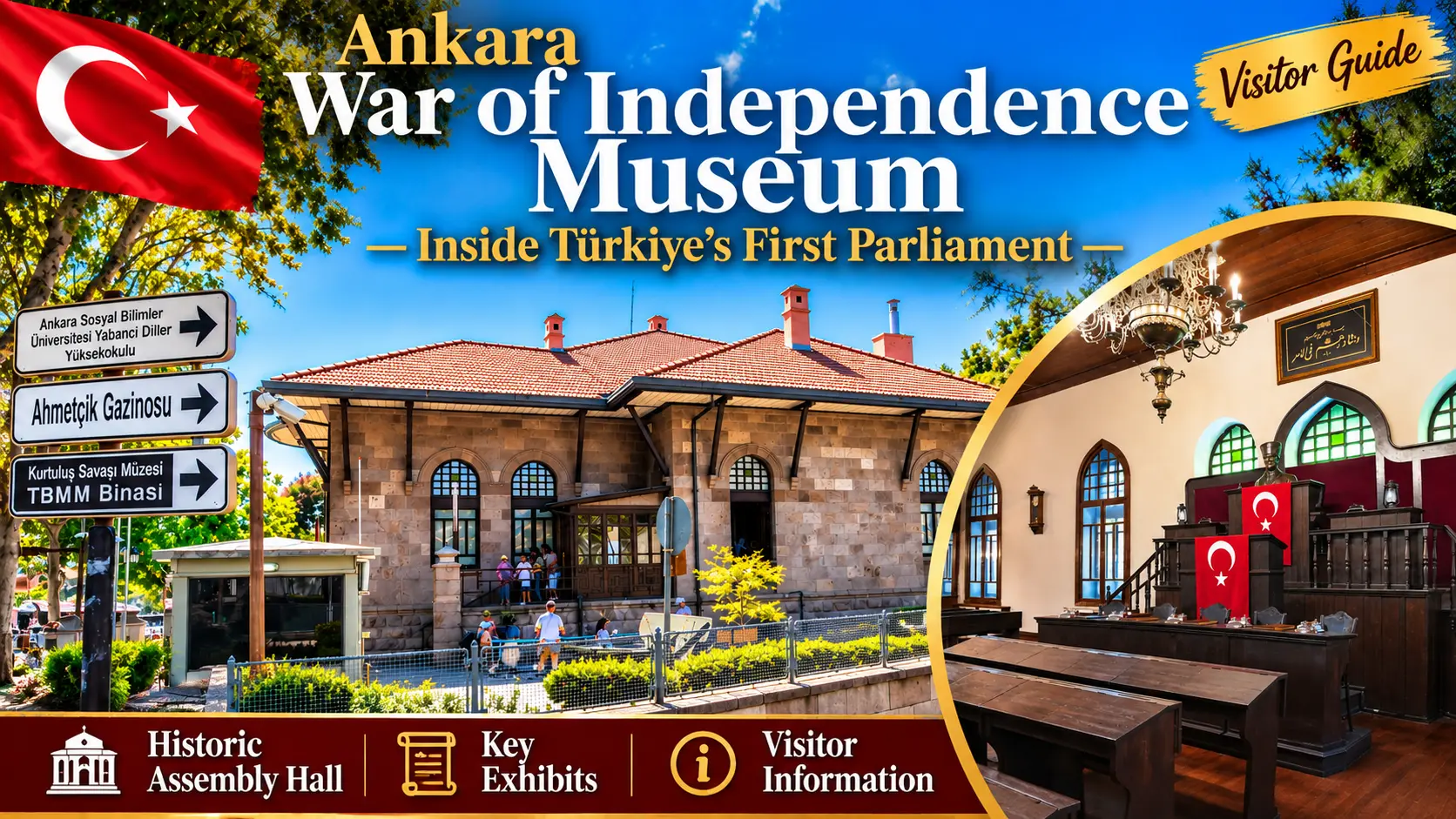
Known in Turkish as Kurtuluş Savaşı Müzesi, the museum occupies the original building of the Turkish Grand National Assembly, which opened on 23 April 1920.
Today, the building helps visitors understand how the National Struggle was organized politically and how the foundations of the modern Turkish Republic were established.
If you are exploring Ankara’s historic Ulus district, this museum is an important place to understand—not simply because of the objects it displays, but because of the decisions made inside its walls.
Visitor notice, reviewed 31 October 2026: I was able to enter the museum during my October 2026 visit. However, the official museum website still displays a closure notice referring to 12 July without a clear year or current status, alongside its normal opening hours. My visit confirms access on that particular day, not future admission. Check directly with the museum before making a special journey.
Is the War of Independence Museum Worth Visiting?
Yes, especially if you are interested in Mustafa Kemal Atatürk, the Turkish War of Independence or the early years of modern Türkiye.
This is a relatively compact historic museum. Its main attraction is not the size of its collection but the opportunity to see the parliamentary setting associated with the country’s National Struggle.
I spent approximately 45 minutes inside during my visit. That was enough time to see the principal rooms and take photographs, although someone interested in reading the exhibition panels carefully could spend longer.
The most rewarding parts of the visit are:
- The historic General Assembly Hall, with its wooden desks and speaker’s platform.
- Rooms associated with the daily work of the First Parliament.
- Exhibits of documents, communications equipment, medals and other historical objects.
- The building’s distinctive stone architecture.
- Its location near other important sites in Ulus.
The museum may be less appealing to travelers looking for a large interactive attraction or an extensive collection that takes several hours to explore.
For me, the most compelling experience was seeing how an institution of enormous historical importance had operated within such a modest building.
Visitor Information: Tickets, Hours and Facilities
The War of Independence Museum is located in Ulus, in Ankara’s Altındağ district.
| Detail | Information |
|---|---|
| Official Turkish name | Kurtuluş Savaşı Müzesi |
| English name | War of Independence Museum |
| Historic identity | First Turkish Grand National Assembly Building |
| Address | Hacıbayram Mahallesi, Cumhuriyet Caddesi No. 2/1, Ulus, Altındağ, Ankara |
| Opening hours listed on the museum website | 09:00–17:00 |
| Ticket office closing time listed | 16:30 |
| Regular closing day listed | Monday |
| Current operating status | I visited in October 2026; current opening status still requires confirmation because the official website displays an undated closure notice |
| Admission | Current amount not independently confirmed |
| Suggested time | Approximately 45–60 minutes |
| Photography | Confirm current rules at the museum |
| Accessibility | Contact the museum for individual access requirements |
Important: Check Whether the Museum Is Open
There is a significant difference between a museum’s published normal opening hours and confirmation that it is currently admitting visitors.
The official Turkish Museums listing gives normal hours of 09:00–17:00, with the ticket office closing at 16:30 and Monday listed as the regular closing day.
However, the same listing also contains a closure notice referring to 12 July without clearly establishing the relevant year or whether the notice is still active. I personally entered the museum during my October 2026 visit, so the notice should not be interpreted as proof that it remained closed throughout October.
A separate page published by the Ankara Provincial Directorate of Culture and Tourism gives visitor hours of 09:00–16:30. Older parliamentary publications list different schedules.
For that reason, the hours above should be treated as published information, not a guarantee of current access.
Before making a special journey, contact the museum or check an updated official announcement.
Official museum page:
Visit the official museum website
Telephone listed by the museum:
+90 312 420 19 20
Email:
ksm@tbmm.gov.tr
Admission and Museum Pass
I could not establish a reliable current admission price from the official information reviewed.
The official museum listing states that MüzeKart is valid for Turkish citizens. That does not establish eligibility for international visitors or other museum passes.
If you plan to visit both the First Parliament Museum and the nearby Republic Museum, ask whether a combined ticket is currently available. An older parliamentary publication describes such a ticket, but its present availability has not been confirmed.
Photography and Accessibility
I took original photographs inside the museum during my visits in 2026.
However, my experience does not establish that all forms of photography, flash photography, video recording or commercial filming are currently permitted.
Check the displayed rules and follow staff instructions.
Similarly, I cannot confirm a complete step-free route through the museum from the available official information. Visitors who need wheelchair access or other assistance should contact the museum before visiting.
What to See Inside the First Parliament Museum
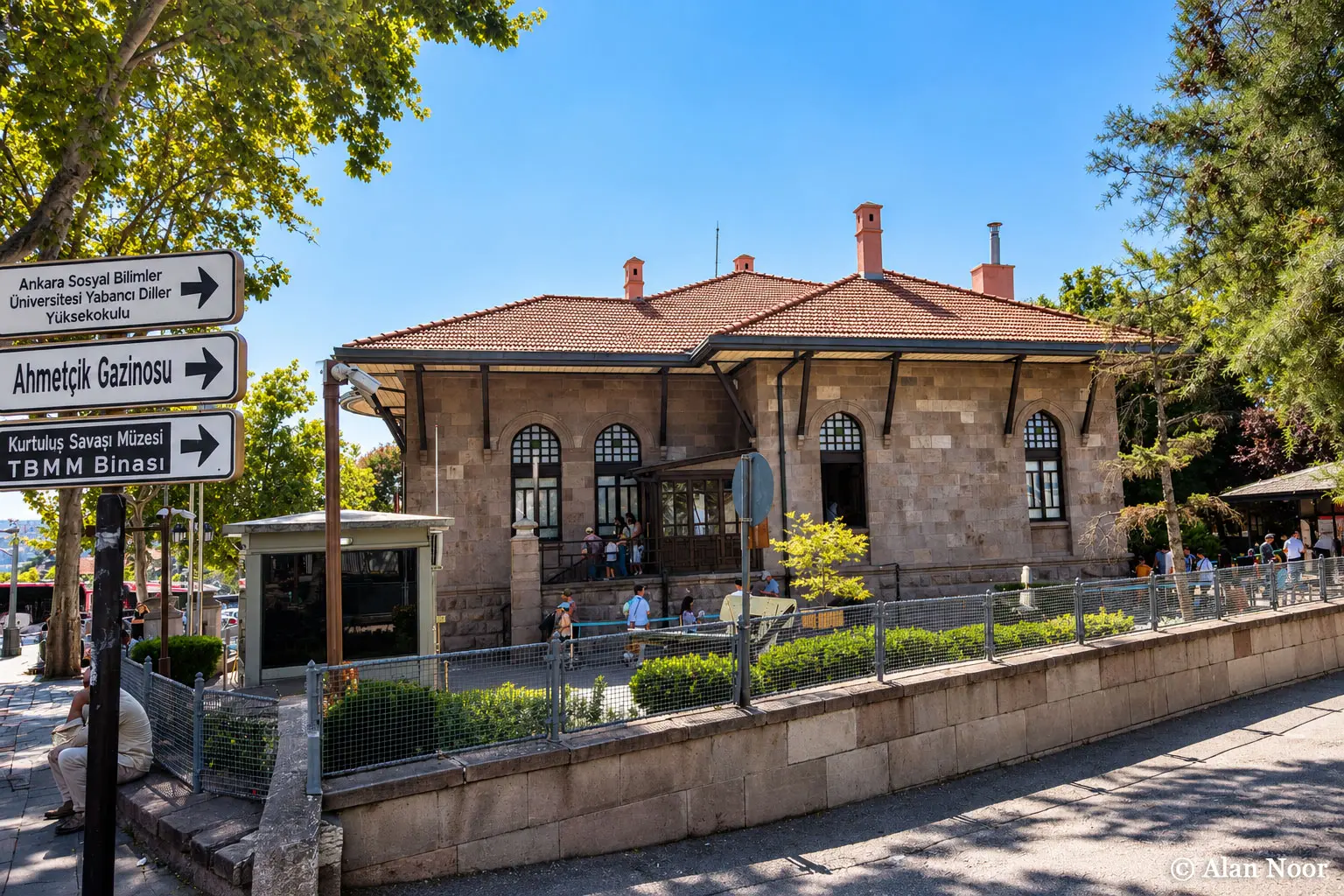
The most useful way to explore the museum is to remember that it was originally a working parliament building.
Its rooms were used for debates, administrative work, meetings and the practical tasks involved in governing during the National Struggle.
The official museum description identifies a series of rooms arranged around the building’s corridor. These include the General Assembly Hall, the Speaker’s Room, administrative offices, commission rooms and spaces used by parliamentary officials.
1. The General Assembly Hall
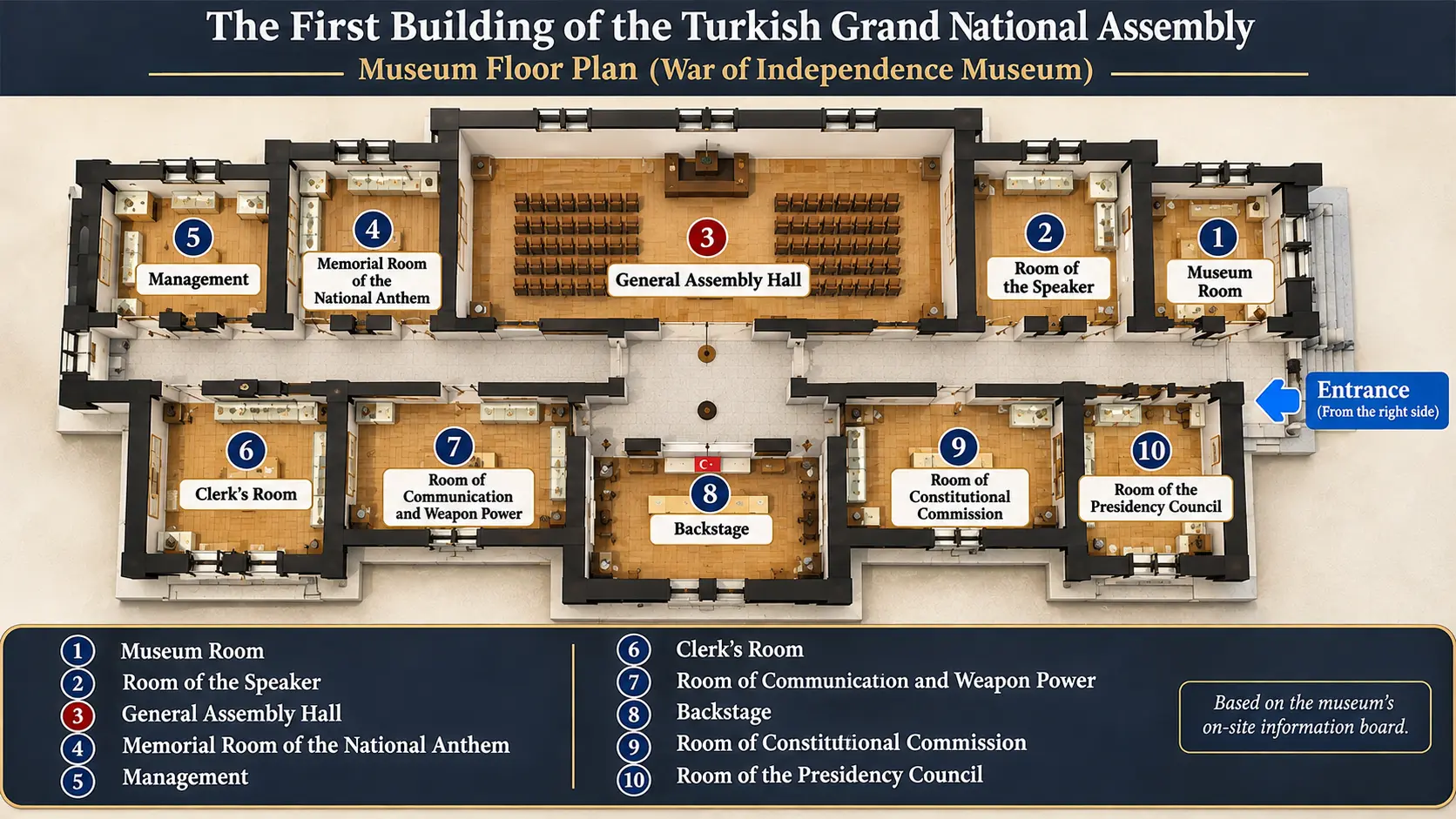
The General Assembly Hall is the museum’s most important room and the place I recommend seeing first.
The room contains rows of wooden benches facing the Speaker’s platform. The arrangement presented in the museum allows visitors to understand how the First Assembly conducted its meetings; the age and provenance of each individual furnishing should not be inferred from appearance alone.
The Ministry of Culture and Tourism describes the hall as the largest room in the building.
At its center stood the Speaker’s platform and the seats of the presiding council. A clerks’ lectern was positioned in front, while ministers and deputies occupied designated benches.
The balconies also had specific functions. One was reserved for diplomatic representatives, another for visitors, and areas below them were used by members of the press.
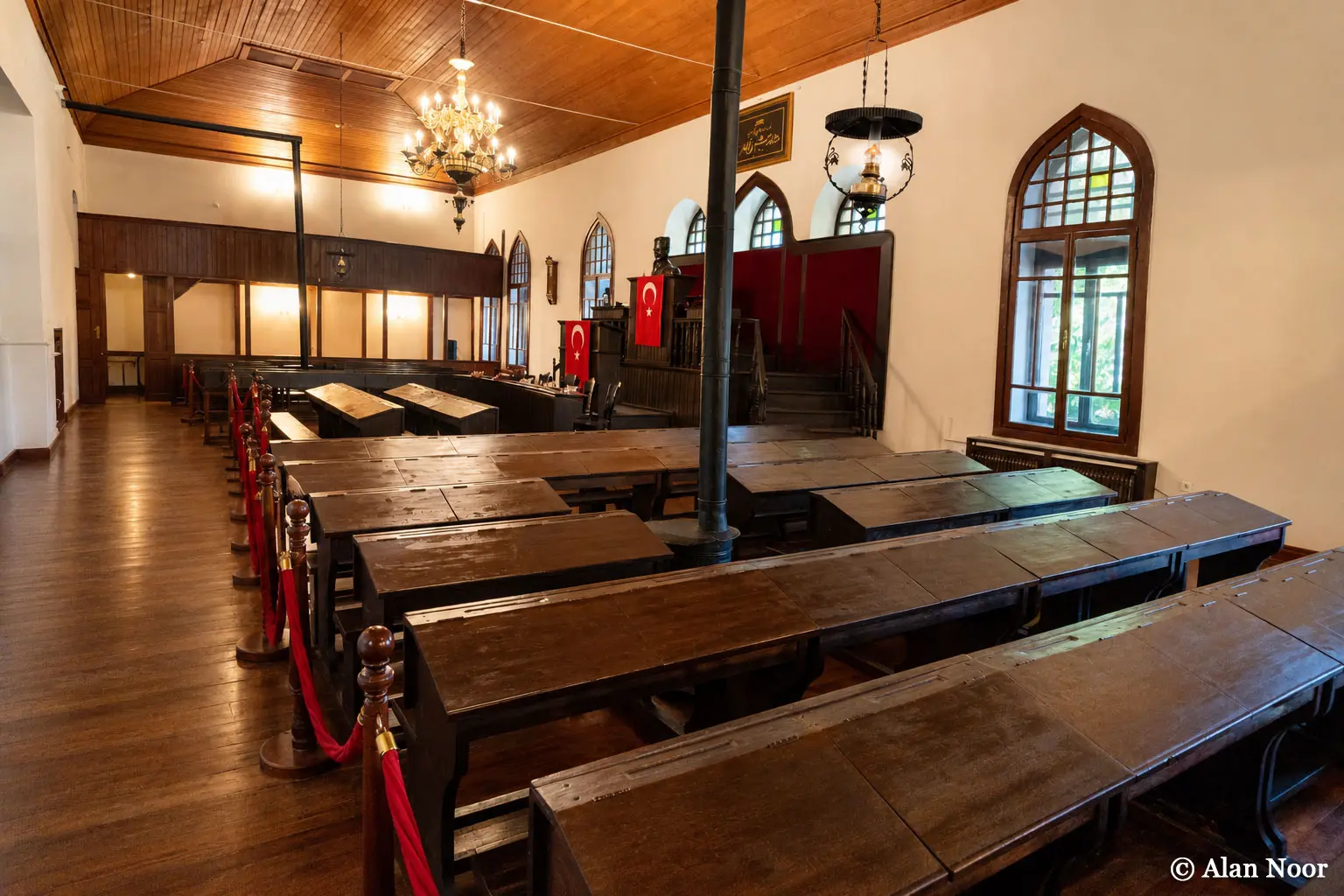
What makes the room especially interesting is the history of its furnishings.
The official account explains that parliamentary benches were obtained from educational institutions in Ankara. Oil lamps and stoves came from nearby coffeehouses, while office supplies were brought from government departments.
The Speaker’s platform was made by a carpenter from Ankara and donated to the Assembly.
These details illustrate the circumstances in which the new parliament was established.
Rather than waiting for a grand building with specially manufactured furniture, the Assembly used materials and resources that could be gathered locally.
During my visit, this practical simplicity was one of the most striking features of the room.
The wooden benches and relatively compact chamber gave me a stronger sense of the difficult conditions of the period than I had expected from photographs alone.
2. The Speaker’s Platform
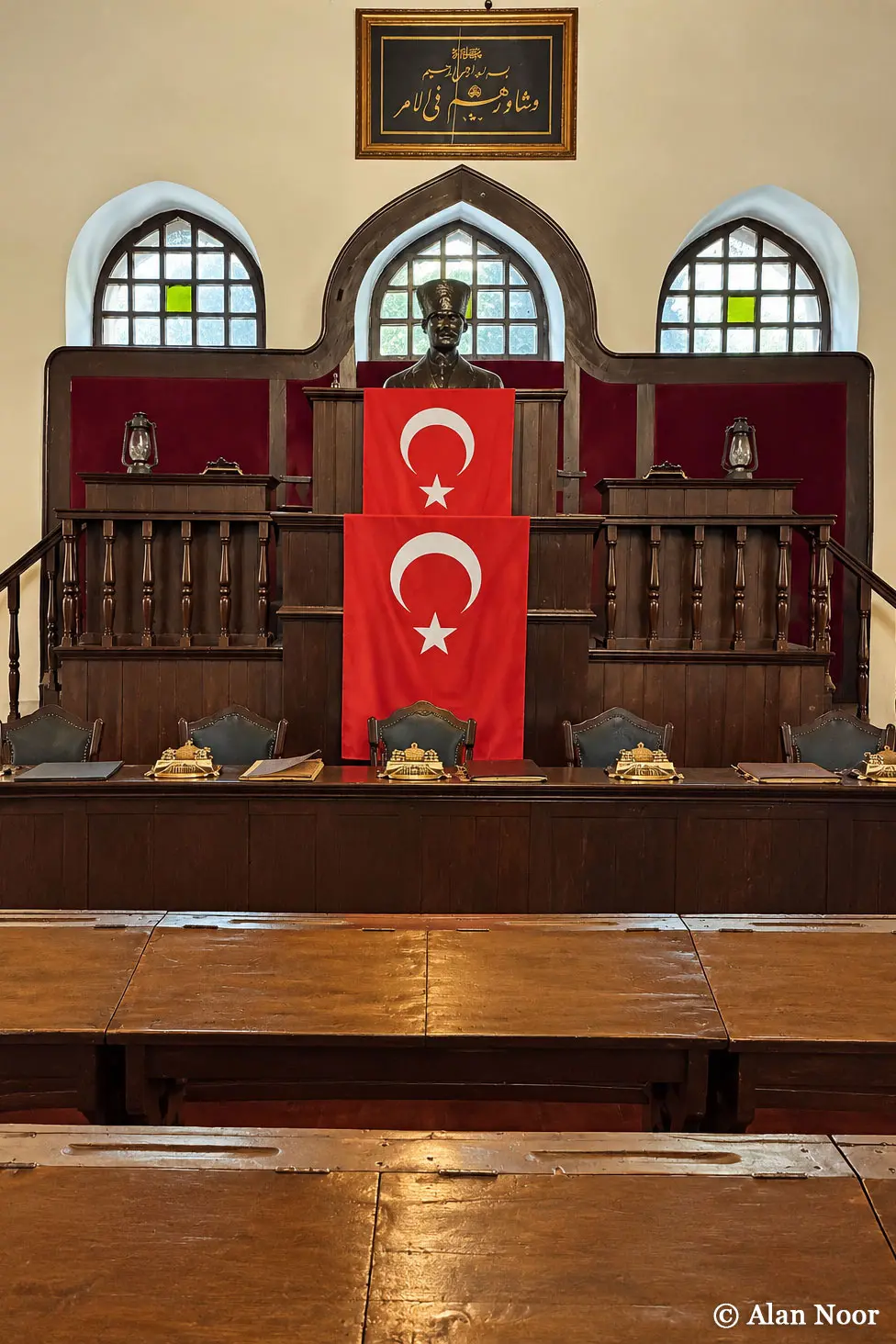
A closer look at the Speaker’s platform reveals details that are easy to overlook in a wide photograph.
The platform occupies the central position in the room, with the surrounding benches arranged to face it.
Behind the Speaker’s chair is a calligraphic inscription associated with part of verse 159 of Surah Al Imran, concerning consultation.
The inscription is identified in the official museum description.
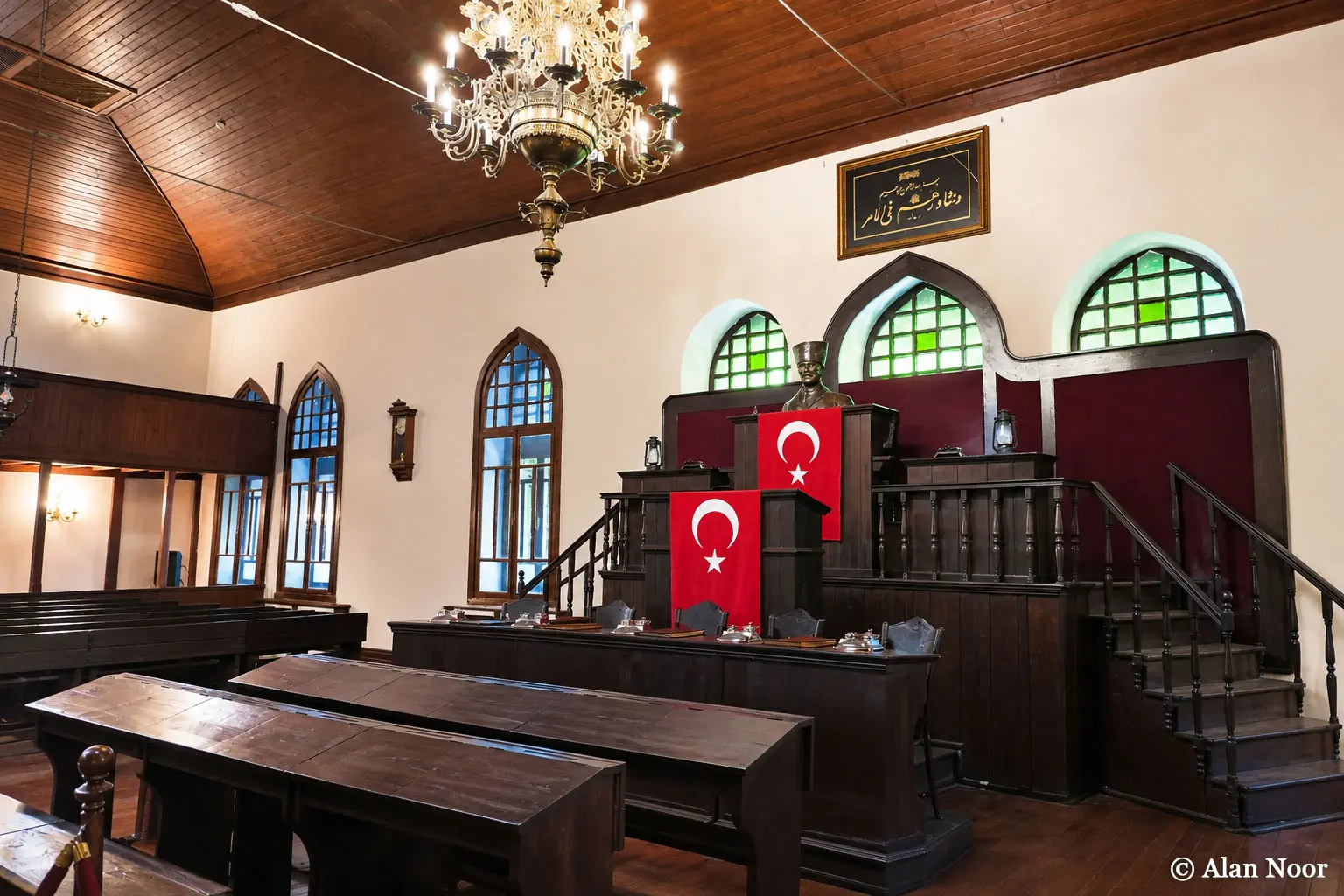
The platform is a useful focal point for understanding the chamber.
From this position, parliamentary proceedings were directed during a period when the Assembly was making decisions with profound consequences for the country.
The room’s layout also helps visitors understand the relationship between the Speaker, deputies, ministers and other participants.
Instead of looking only at the platform, take time to examine how the benches and balconies are positioned around it.
3. Rooms Used by Parliamentary Leaders and Officials
The First Parliament required more than a debating chamber.
Its members and officials also needed places to prepare documents, consider proposals, hold meetings and carry out administrative work.
The official museum description identifies rooms used by the Speaker, the presiding council, commissions, clerks and other parliamentary personnel.
One room was used as Mustafa Kemal Pasha’s working room and also served an associated administrative function. Its displays include furnishings and objects linked to the period.
Other rooms were associated with the examination of legislative proposals and the practical administration of the Assembly.
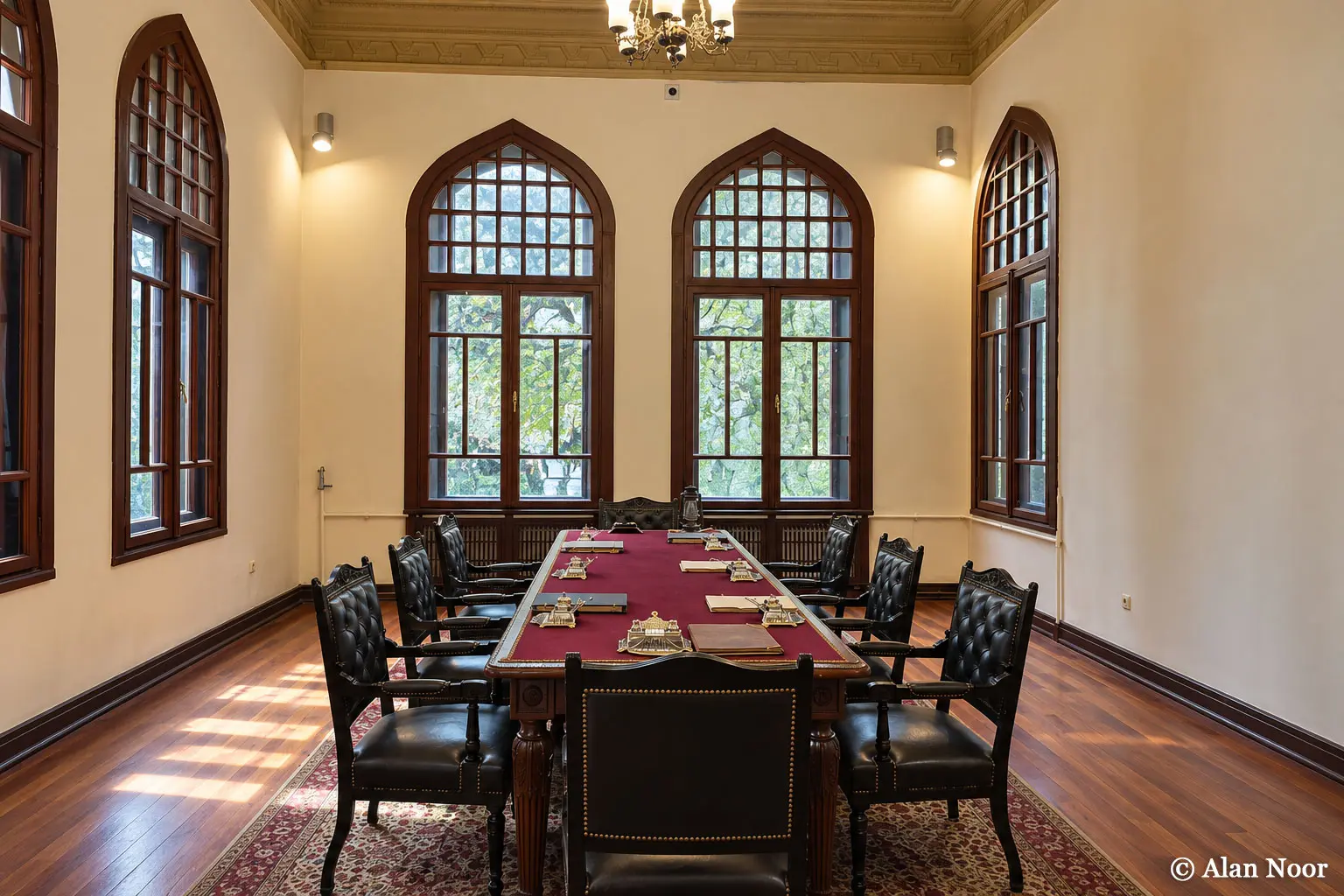
These spaces create a useful contrast with the General Assembly Hall.
The main chamber represents the public and formal work of parliament, while the smaller rooms help explain the administrative activities that supported it.
For visitors, this is an important part of the building’s story: parliamentary decisions required preparation, discussion, record-keeping and coordination.
The precise historical function of an individual photographed room should always be checked against its museum label rather than inferred from its furniture alone.
4. The Historic Corridor
The corridor is not the museum’s most dramatic feature, but it helps explain the building’s scale.
In my photographs, the wooden floor and closely connected rooms show how compact the interior feels.
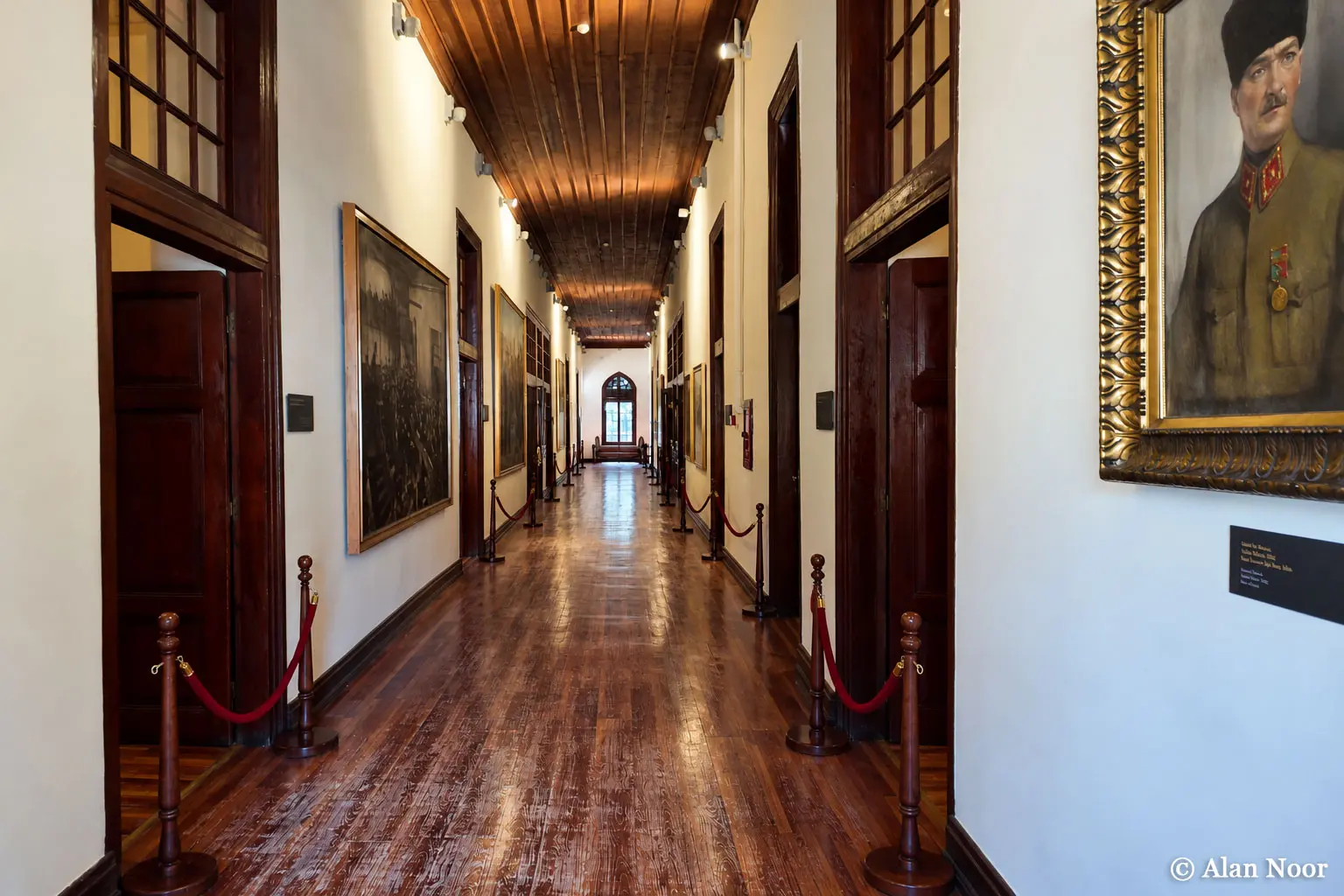
This was one of the details that changed my impression of the building.
Before visiting, I had imagined a larger parliamentary complex. In person, the relationship between the corridor, offices and assembly chamber made the institution feel much more immediate.
The building’s compactness is also useful practical information.
Visitors can focus on the main hall and then examine the smaller rooms without needing to cover a vast site.
The photograph shows part of the interior circulation, but it should not be used to make claims about step-free accessibility or the complete visitor route.
5. Historic Communications Equipment
The museum includes objects associated with the practical and technical aspects of the National Struggle.
The official museum description identifies communications equipment displayed in the former commission room, including a manual telephone exchange, field telephone, Morse equipment and a cipher machine believed to have been developed in the 1920s.
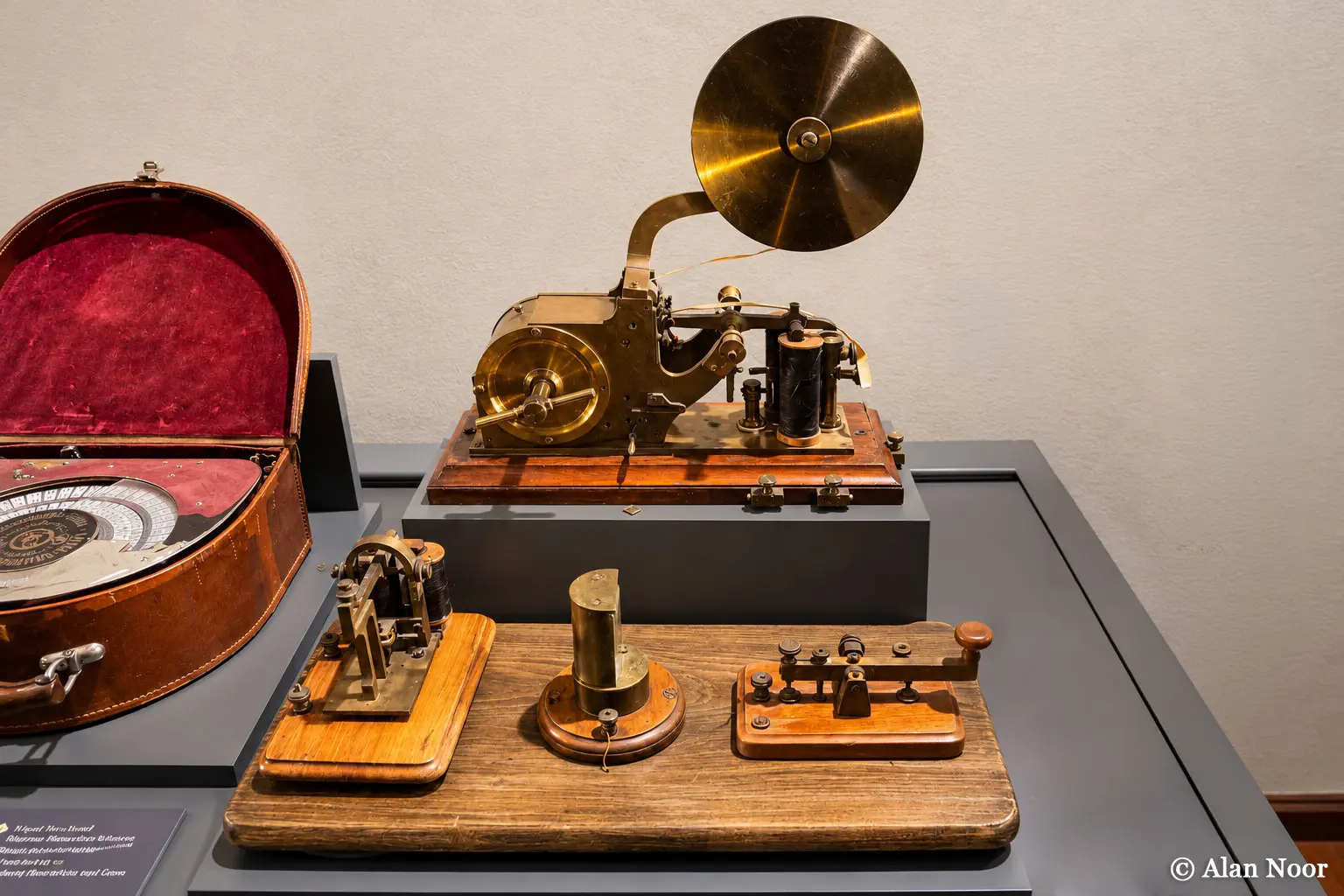
These objects add an important dimension to the story.
Political and military decisions depended on the ability to communicate information across distances, particularly during a period of conflict.
The equipment helps visitors consider how messages and instructions could be transmitted before modern digital communications.
However, the precise model and original use of the device shown in the photograph should be established from its individual exhibit label. The general description of the museum’s communications collection does not identify every photographed object.
6. Medals, Personal Objects and Historical Documents
Another part of the museum presents personal belongings, medals and documents connected with the Assembly and the National Struggle.
The official museum description identifies displays containing Independence Medals, identity documents, personal possessions and objects associated with parliamentary members and officials.
It also describes a separate display of items connected with Atatürk.
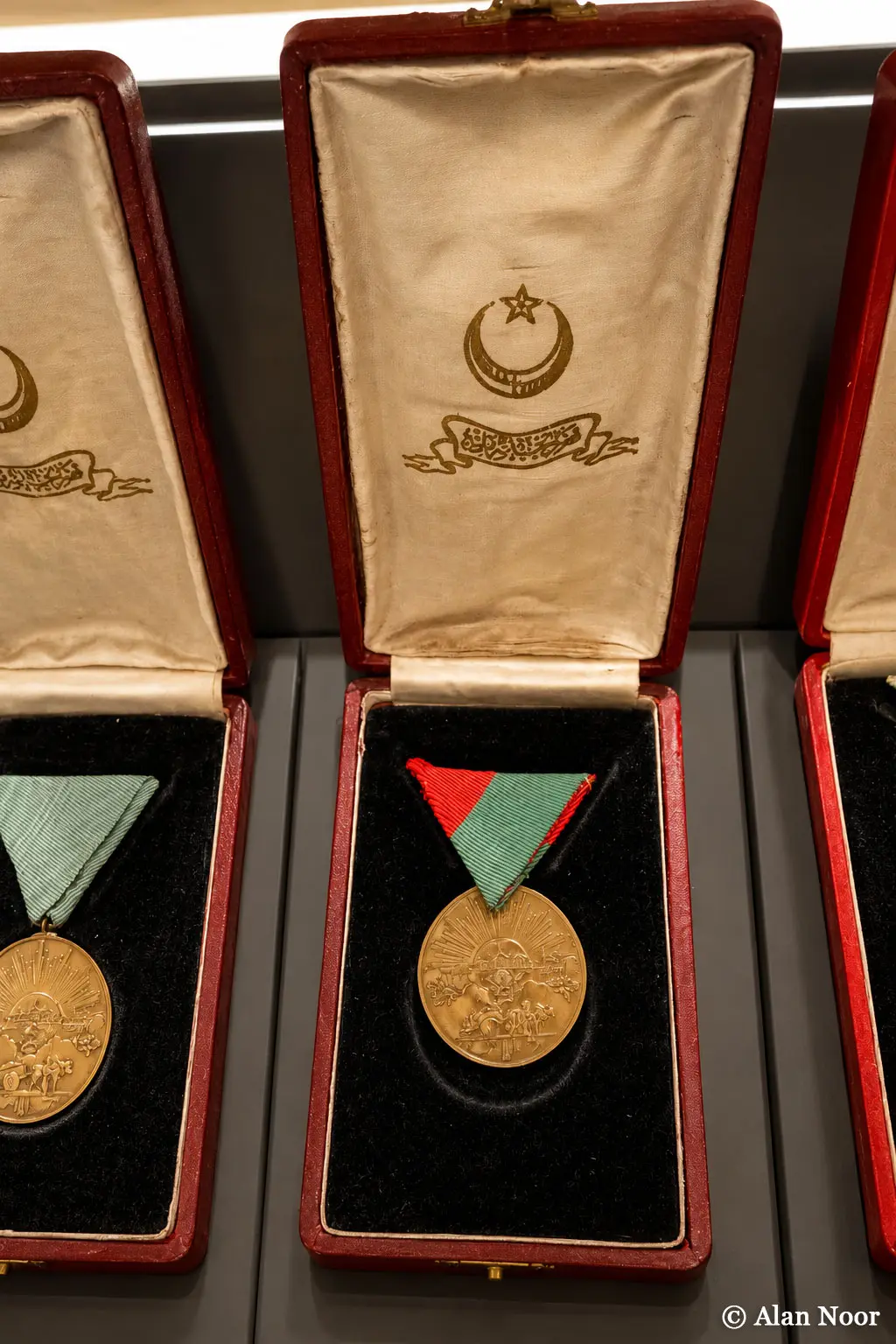
These exhibits offer a more personal perspective on the period.
The parliamentary chamber explains where decisions were made. Personal objects and medals help visitors consider the individuals and institutions involved.
The decorations should be identified according to their own museum labels; similar-looking medals may represent different awards or periods.
7. The Turkish Flag and National Symbols
The museum’s displays also include objects associated with national identity.
One of my photographs shows a historic Turkish flag presented inside a display.
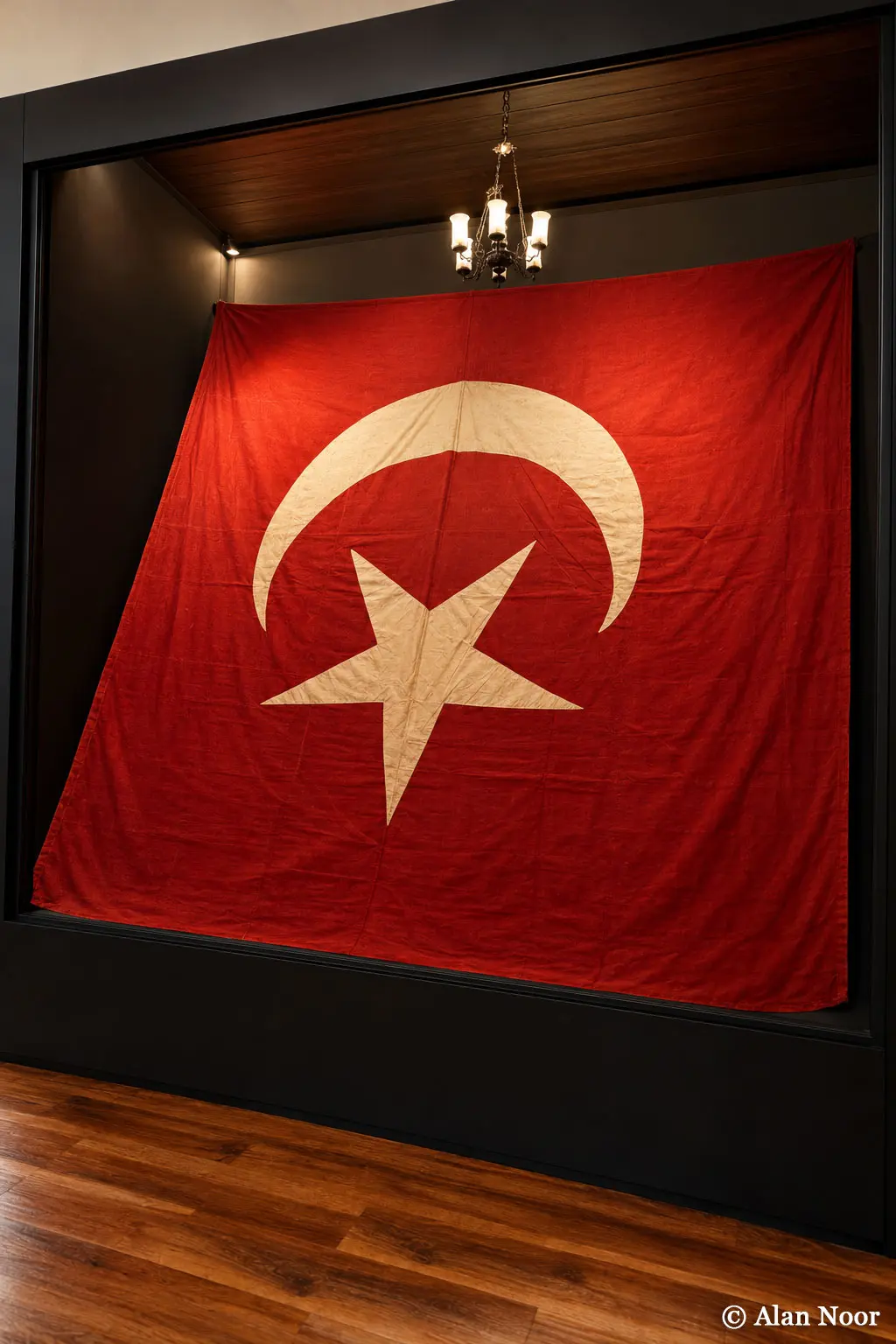
This is a useful visual connection between the political history of the Assembly and the national symbols that visitors encounter throughout Türkiye today.
However, the particular flag’s age, provenance and historical use cannot be established from the photograph alone.
Its individual exhibit label should be consulted before assigning it to a specific event.
Why the First Parliament Matters
To understand the significance of the museum, it helps to know why the Assembly opened in Ankara.
Following the First World War and the occupation of parts of the Ottoman Empire, the Turkish National Movement organized resistance.
Ankara became the political center of the movement led by Mustafa Kemal Pasha.
On 23 April 1920, the Turkish Grand National Assembly opened in the building now used as the War of Independence Museum.
The following day, Mustafa Kemal Pasha was elected Speaker.
The Assembly operated during the War of Independence and played a central role in establishing the institutions of the emerging Turkish state.
Several major events are associated with this period.
A Timeline of Major Decisions
| Date | Event |
|---|---|
| 23 April 1920 | Opening of the Turkish Grand National Assembly |
| 24 April 1920 | Mustafa Kemal Pasha elected Speaker |
| 20 January 1921 | Adoption of the 1921 Constitution |
| 12 March 1921 | Adoption of the Turkish national anthem, the İstiklâl Marşı |
| 1 November 1922 | Abolition of the Ottoman sultanate |
| 24 July 1923 | Signing of the Treaty of Lausanne |
| 13 October 1923 | Ankara designated as the capital |
| 29 October 1923 | Proclamation of the Republic |
| October 1924 | End of the First Parliament building’s period of parliamentary use; official parliamentary publications variously give 15 and 18 October |
The Treaty of Lausanne was signed in Switzerland, not inside the museum building. Its political significance and subsequent approval are part of the broader history associated with the Assembly. The Ankara Provincial Directorate of Culture and Tourism also describes a table displayed in the museum as the table on which the treaty was signed; that museum attribution should not be confused with the location of the signing.
This distinction matters because the museum presents the history of events that occurred both inside and beyond the building.
The Architecture of the First Parliament
The building was originally planned for use by the Committee of Union and Progress rather than as a national parliament.
Construction began during the First World War but was not completed as originally intended.
When the decision was made to open the Grand National Assembly in Ankara, the unfinished building was adapted for parliamentary use.
According to the Ministry of Culture and Tourism, residents of Ankara contributed materials and labor to help complete it.
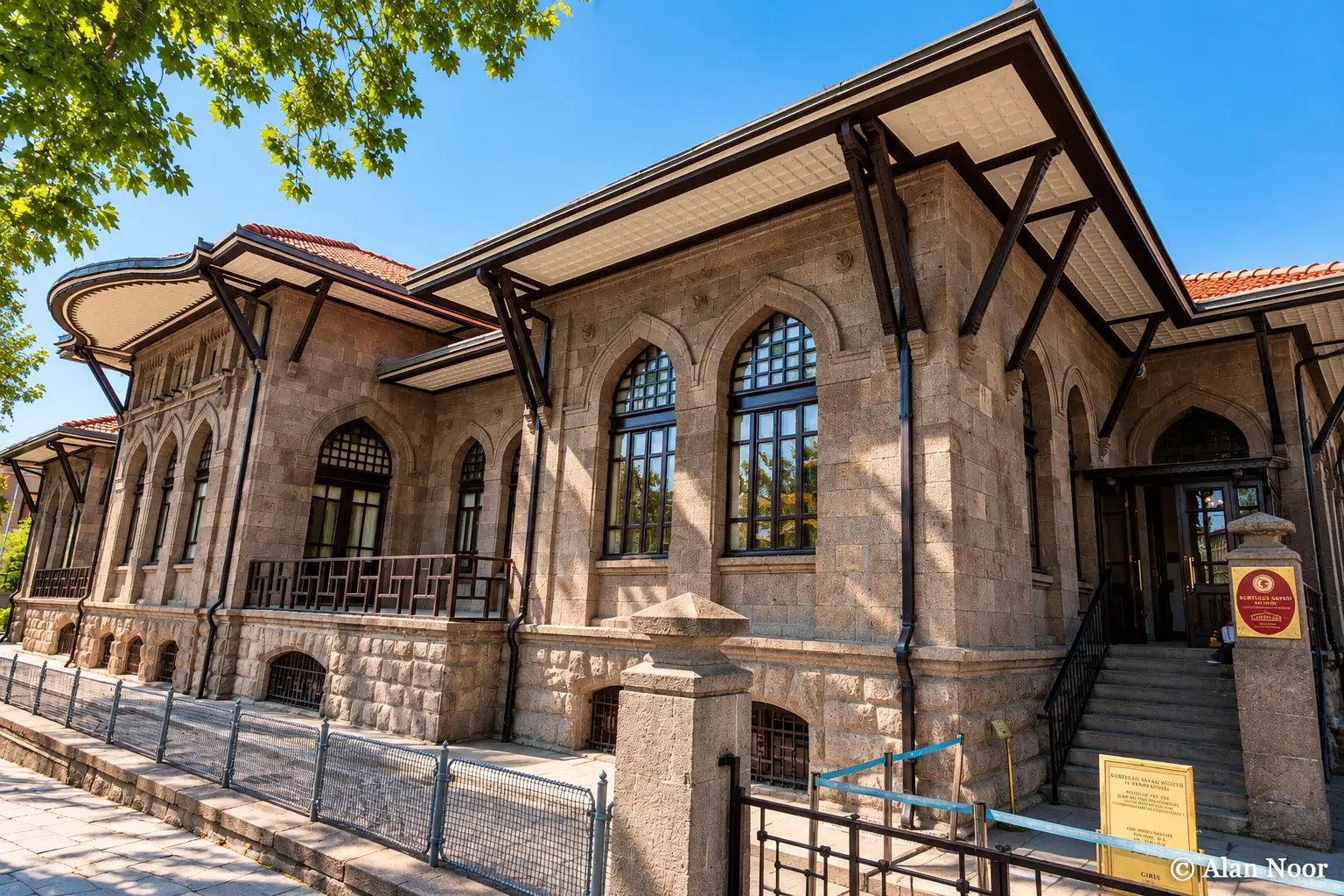
The building was constructed using locally quarried pinkish-purple andesite, commonly known as Ankara stone.
It is regarded as an early example of the First National Architectural Movement in Ankara.
Looking at the exterior after learning this history gives the building a different meaning.
Its stone façade is not simply a decorative feature. It is part of the material history of a building adapted to serve a new political institution under difficult conditions.
My Experience Visiting the Museum
I visited the War of Independence Museum twice in 2026.
My first visit was on 5 September, followed by another visit in October.
During my October visit, I went alone on a sunny weekday and arrived at approximately 3 p.m.
I used public transport and walked through the Ulus area to reach the museum.
My reported journey took around 25 minutes, including transport and walking. This was my own journey time, not a measured walking time from Ulus Metro station.
Inside the museum, I spent approximately 45 minutes exploring the rooms and taking photographs.
It was not particularly crowded during that visit, and I did not experience any major inconvenience.
That observation applies only to the time I was there. It does not establish typical crowd levels or guarantee a similarly quiet visit.
What Surprised Me Most
The building’s modest size was my strongest initial impression.
I had seen photographs of the parliamentary chamber before visiting, but they had not conveyed how compact the building felt.
The General Assembly Hall was particularly memorable.
The wooden benches, the speaker’s platform and the arrangement of the room made it easier to imagine the physical conditions in which the Assembly conducted its work.
This was not a grand modern parliamentary complex. It was a comparatively modest building adapted for an extraordinary purpose.
That contrast is what made the visit meaningful to me.
What I Would Recommend to Other Visitors
Based on my experience, I would prioritize the General Assembly Hall before examining the smaller rooms.
If you have limited time, focus on understanding the room’s layout and the historical significance of the Assembly rather than trying to inspect every display at the same pace.
If you enjoy historical documents and objects, allow additional time for the exhibits.
The museum is particularly rewarding when you already know something about the Turkish War of Independence, but even a brief introduction to the events of 1920–1923 can make the visit more meaningful.
The main practical disadvantage is that the building is relatively small. Visitors expecting a large museum with extensive interactive installations may find the experience shorter than anticipated.
For me, the importance of the site outweighed its size.
How to Get to the Museum from Ulus
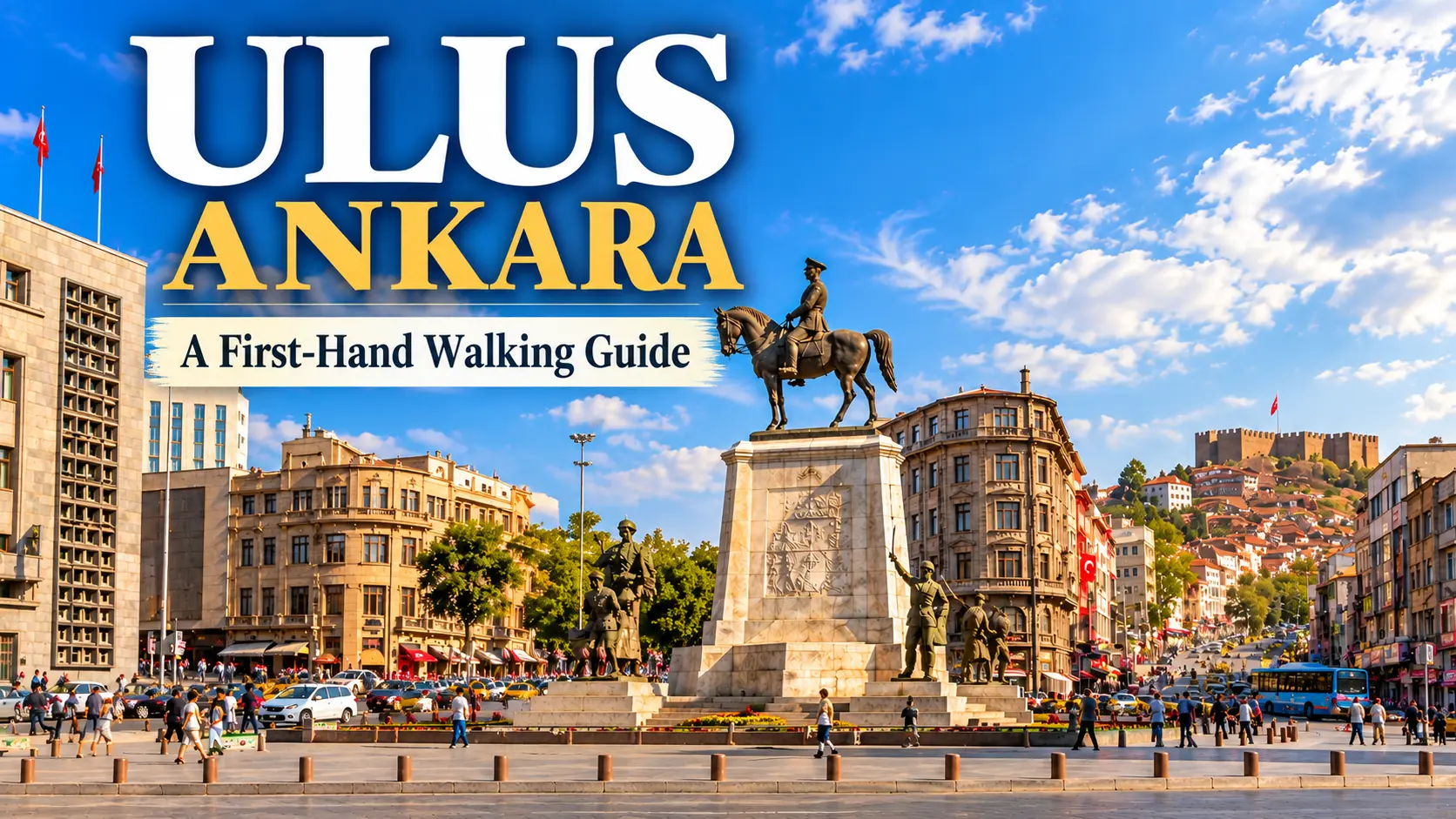
The museum stands in the historic Ulus area of Ankara, near Ulus Square.
The Ankara Provincial Directorate of Culture and Tourism identifies Ulus Metro station as a convenient public transport stop and describes the museum as a short walk from the station.
Its official visitor information gives an approximate walking time of five minutes, although the actual time will depend on the exit used, the route and individual walking speed.
This published estimate should not be confused with my own journey of approximately 25 minutes, which included public transport and walking.
Look for signs reading Kurtuluş Savaşı Müzesi or I. TBMM Binası.
Official address: Hacıbayram Mahallesi, Cumhuriyet Caddesi No. 2/1, Ulus, Altındağ, Ankara.
For a precise route, use a current map and confirm the museum’s operating status before departure.
I have not independently verified every pavement, crossing or step-free access point along the route.
Find the museum on the map: Use the Google Maps button for directions to the War of Independence Museum in Ulus, Ankara. The interactive map below shows the museum’s location. Check the museum’s current opening status before setting out.
First Parliament Museum vs Republic Museum
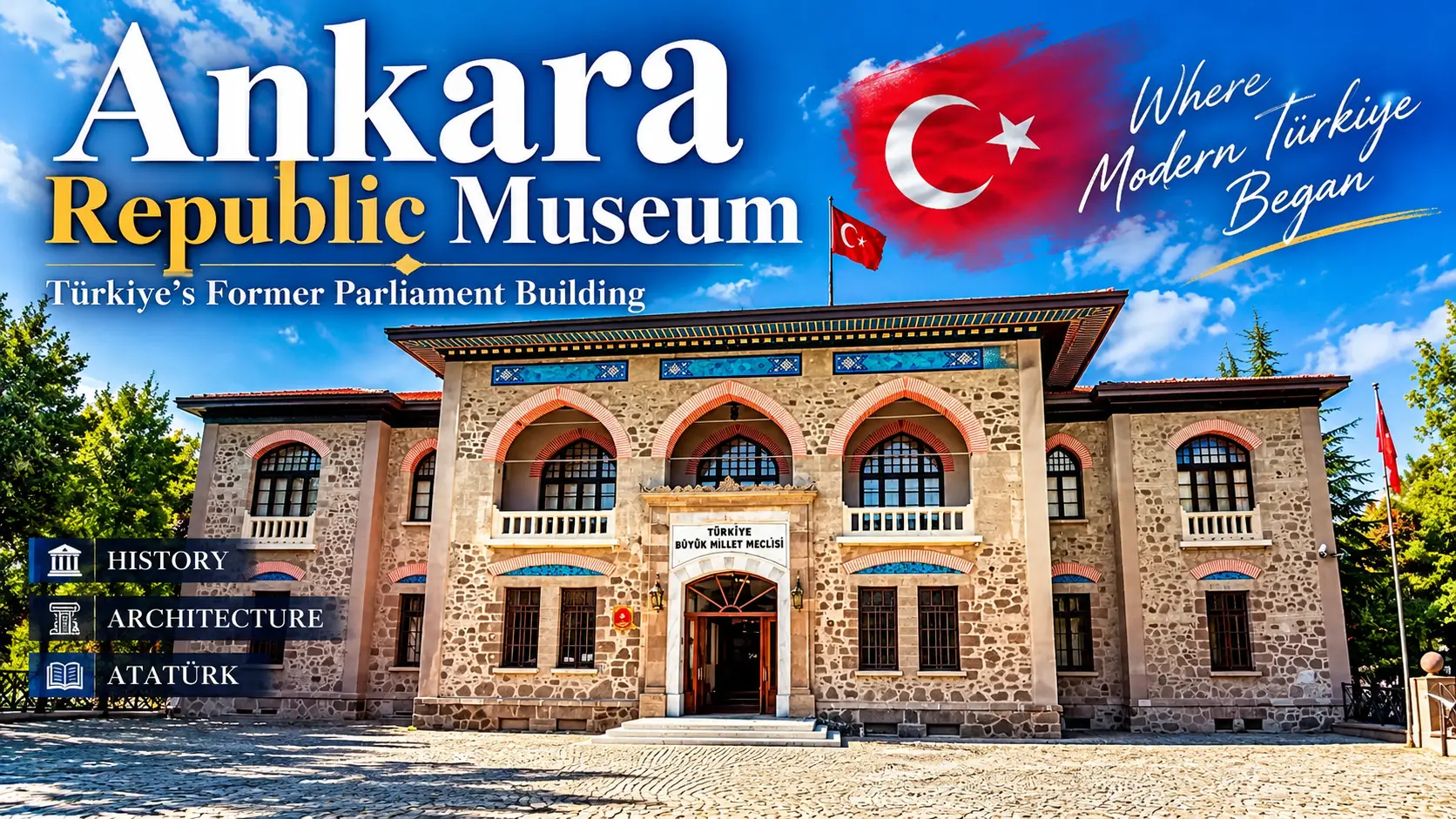
Visitors to Ulus may encounter two museums associated with Türkiye’s early parliamentary history.
They are separate buildings with different historical roles.
| War of Independence Museum | Republic Museum | |
|---|---|---|
| Historic building | First Parliament | Second Parliament |
| Main period of parliamentary use | 1920–1924 | From 1924 |
| Main focus | National Struggle and the founding Assembly | Parliamentary history during the Republic |
| Main reason to visit | See the historic first assembly chamber | Continue the story of the Republic’s institutions |
The First Parliament Museum is the logical starting point for understanding the Assembly’s origins during the National Struggle.
The Republic Museum offers a continuation of the parliamentary story after the move to the Second Parliament building.
If you enjoy modern Turkish history, visiting both provides a broader understanding than visiting either one alone.
Because current operating arrangements may differ, confirm that both museums are open before planning a combined visit.

Other Places to Visit in Historic Ulus
The War of Independence Museum can be part of a broader visit to Ankara’s historic center.
Republic Museum
The former Second Parliament building is the most directly related attraction.
It continues the political and institutional history introduced by the First Parliament Museum.
Hacı Bayram Veli Mosque
This important mosque is also connected with the historical setting of the Assembly’s opening.
The official parliamentary account describes the opening ceremonies of 23 April 1920 as taking place after Friday prayers at Hacı Bayram Mosque.
Today, it remains a place of worship. Visitors should respect prayer activities and any current visitor restrictions.
İş Bankası Economic Independence Museum
This museum offers another perspective on Türkiye’s institutional and economic history.
It can be an interesting addition for visitors exploring the development of the Republic beyond its parliamentary institutions.

Ankara Castle
Ankara Castle offers a different kind of historical experience, with old streets, traditional buildings and views over the city.
It is better considered an additional destination rather than part of the immediate parliamentary museum complex.
For a broader introduction to the area, see my guide to historic Ulus in Ankara.
Frequently Asked Questions
- How long should I spend at the War of Independence Museum?
-
I spent approximately 45 minutes during my visit. Around 45–60 minutes is a reasonable planning estimate for the main rooms, although visitors who read the exhibition panels closely may need more time.
- Is the War of Independence Museum currently open?
-
I entered the museum during my October 2026 visit. However, the official listing still displays a closure notice whose current applicability is unclear. My visit does not guarantee access on another date; confirm the operating status directly before visiting.
- What are the museum's opening hours?
-
The Turkish Museums website lists 09:00–17:00, with ticket sales ending at 16:30 and Monday as the regular closing day. Other official publications give different schedules. These hours should not be treated as confirmation that the museum is currently open.
- How much does admission cost?
-
I could not confirm the current admission price from the official information reviewed. Check with the museum before visiting.
- Can I take photographs inside?
-
I took photographs during my visits in 2026, but this does not establish the current rules for every visitor, exhibit or type of photography. Follow the museum’s posted instructions.
- Is the museum wheelchair accessible?
-
I could not verify a complete accessible route or the availability of specific accessibility facilities. Contact the museum before visiting if you require step-free access or assistance.
- Is this the same museum as the Republic Museum?
-
No. The War of Independence Museum occupies the First Parliament building. The Republic Museum occupies the former Second Parliament building.
- What is the most important room?
-
The General Assembly Hall is the main highlight. Its preserved parliamentary setting is the strongest visual connection to the First Assembly.
- Is the museum suitable for visitors with little knowledge of Turkish history?
-
Yes. Knowing the basic events of the National Struggle and the opening of parliament in 1920 will make the exhibits easier to understand, but the historic chamber itself provides a useful introduction.
Final Verdict: A Small Building with an Important Story
The War of Independence Museum is not a large attraction, and that is worth knowing before visiting.
Its value lies in the historic building itself, especially the General Assembly Hall where the First Turkish Grand National Assembly conducted its work.
For travelers interested in Atatürk, the War of Independence or the origins of the Turkish Republic, I consider it a worthwhile stop in Ulus.
I was particularly struck by the contrast between the building’s modest physical scale and its historical importance.
The wooden benches, speaker’s platform and adjoining rooms made the history feel more tangible than photographs alone.
Allow approximately an hour, consider combining the museum with the nearby Republic Museum, and confirm the current opening status before making your journey.
A story inspired by Türkiye
Beyond the Cistern: Discover Barış & Noah

Istanbul’s hidden chambers are only one part of Türkiye’s story. If you enjoy exploring places filled with history and mystery, step into the world of Barış & Noah—an original serialized adventure about friendship, discovery, and the unexpected paths that connect them.
Curious where their journey begins? Start with a morning in Ankara. The first episode is ready to read.
Sources and Editorial Notes
Official historical and museum sources
-
Ankara Provincial Directorate of Culture and Tourism — War of Independence Museum (First Parliament Building)
Building history, architectural details, room descriptions, parliamentary events and access information.
https://ankara.ktb.gov.tr/TR-260402/kurtulus-savasi-muzesi-i-tbmm-binasi.html -
Turkish Museums — Kurtuluş Savaşı Müzesi
Published opening hours, closing day, address, contact details and closure notice.
https://muze.gov.tr/muze-detay?DistId=MRK&SectionId=CUM02 -
Turkish Grand National Assembly — Institutional History
Official parliamentary history.
https://www.tbmm.gov.tr/kurumsal-tarihce -
Turkish Grand National Assembly — Historical Parliamentary Album, Volume 1
Historical information about the First Parliament building and its period of use.
https://cdn.tbmm.gov.tr/TbmmWeb/Albumler/Tbmm_Albumu/Cilt1.pdf -
Turkish Grand National Assembly — Historical Parliamentary Album, Volume 2
Information about the move from the First Parliament to the Second Parliament building.
https://cdn.tbmm.gov.tr/TbmmWeb/Albumler/Tbmm_Albumu/Cilt2.pdf
Firsthand research: I visited in September and October 2026 and photographed the museum, its exhibits and on-site information panels.
Information reviewed: 31 October 2026. Official museum and provincial tourism sources list different opening hours, and the museum website contains a closure notice with an unclear date. Parliamentary publications also differ on the exact date in October 1924 when the First Parliament building ceased parliamentary use.
Before you visit: My observations reflect the dates I visited. Opening hours, fees, closures, photography rules and accessibility arrangements can change, so check directly with the museum before traveling.