When you try to understand someone, the hardest thing may not be what they did, but why it looks as though they left nothing behind.
The afternoon light was less forgiving than the morning.
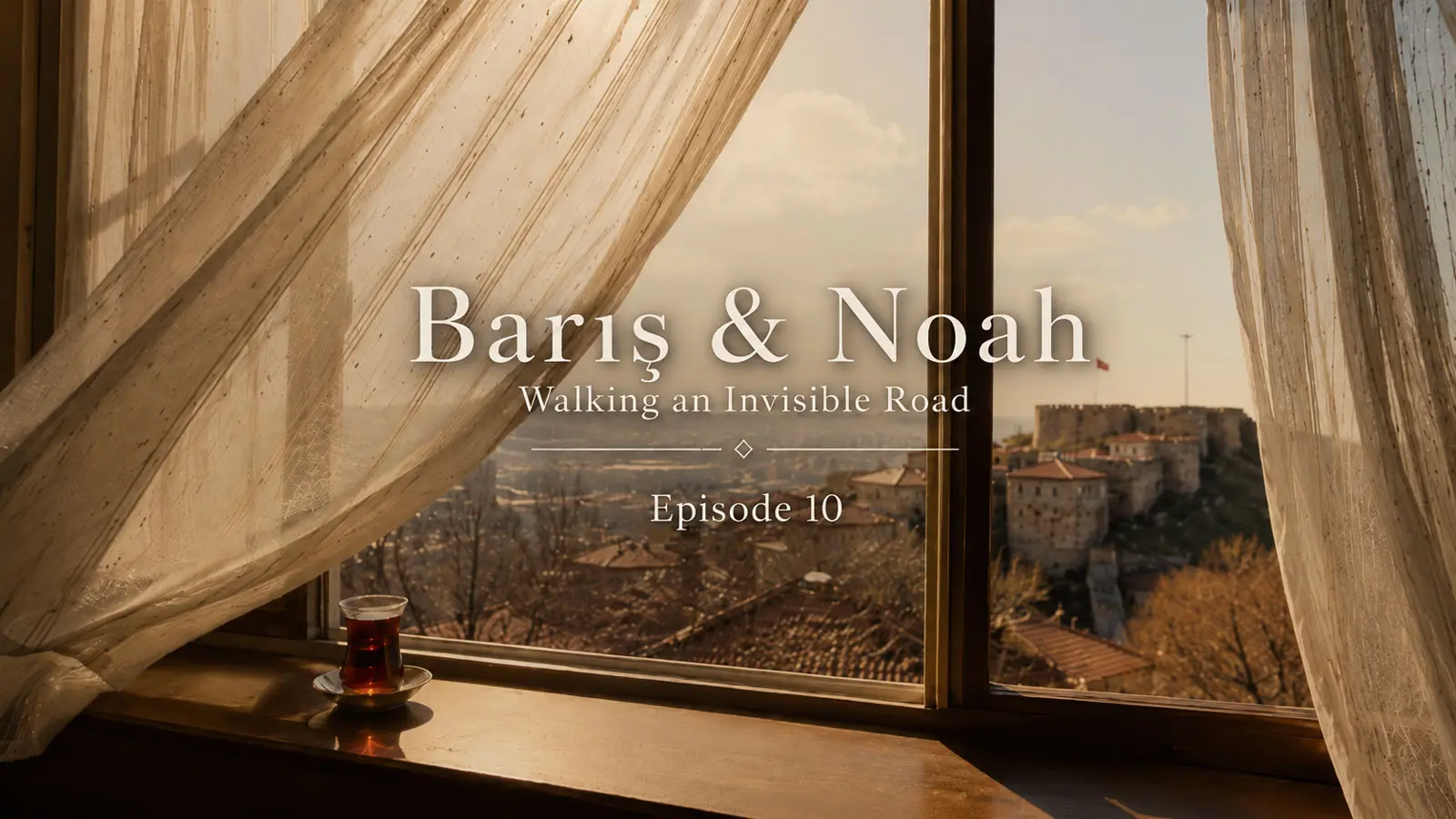
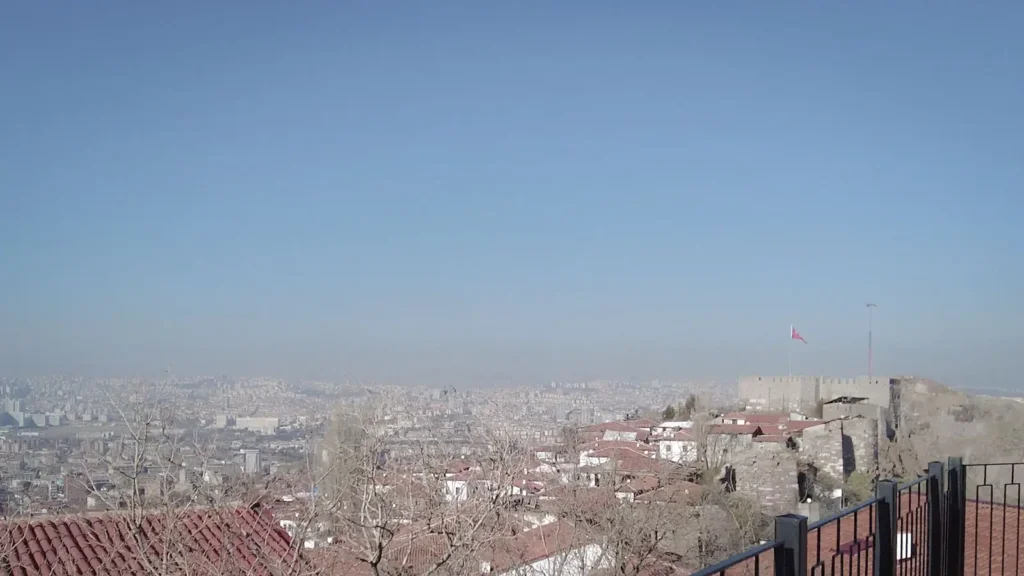
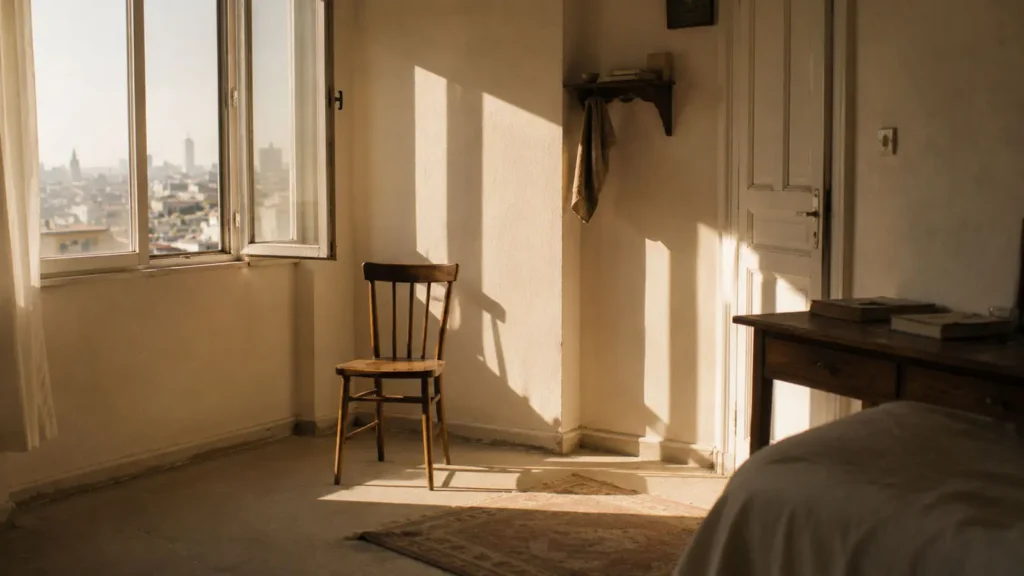
The sky over Ankara was high and dry, and it brought everything into sharp relief—the walls, the windows, even the edges of the furniture. It was the kind of light that seemed ready to expose even what should have stayed unseen.
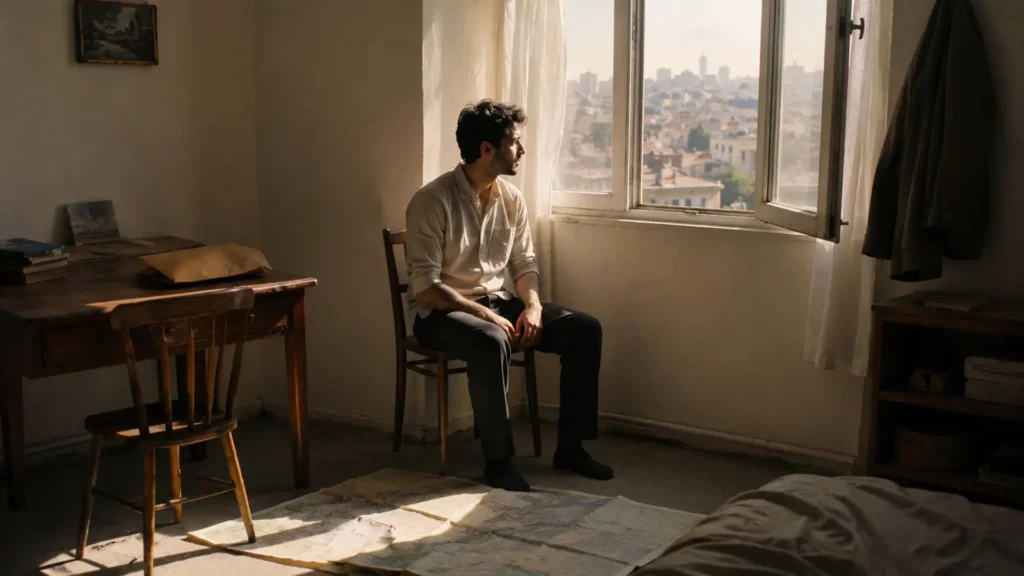
Barış sat by the window in his room.
On the floor lay the folded map.
In the desk drawer, the unopened brown envelope.
And in his mind, the weight of the shoes, and the dry color of the soil still clinging to the sole.
The traces of his father were, little by little, increasing.
And yet the man himself seemed to be moving farther away.
Mustafa.
He knew the name now.
He had seen the shoes.
He had found the map.
But he still did not know where the man had been going, what he had been thinking, or what kind of life he had lived.
Things remained.
But they would not gather into a person.
That contradiction pressed on his chest more than usual today.
From outside the room came the sound of cloth being shaken out.
Dry, short sounds.
Once.
Then again.
Barış stood and stepped into the hallway.
On the small balcony facing the courtyard, Emine was hanging laundry. The edge of a white sheet caught the light, bright enough to sting the eyes. There was hardly any wind, and yet the cloth moved as though it alone knew the sky.
Emine looked at him with a clothespin between her lips.
“What is it?”
Her voice was quiet, as always.
“Mom.”
The word came out straighter than he expected.
“What kind of man was Dad?”
Emine’s hand stopped.
Only that small movement—taking the clothespin from her mouth and holding it between her fingers—remained.
Barış waited through the silence.
Before, that silence alone might have been enough to make him step back.
Not now.
“There was a map. There were the shoes. There’s a name. But the one thing that matters is still missing.”
The words came out on their own.
No—
not on their own.
They came the way something long shut inside finally finds a crack to break through.
“What kind of man was he? His work, where he was going, what he was thinking—how can all of that be left behind without anything to explain it?”
The last line came out sharper.
Maybe he was angry.
That thought came to him only then.
At his father.
At his mother.
At himself, for being told nothing.
He couldn’t tell.
For a while, Emine looked into the empty laundry basket.
Then she set one clothespin down on the railing.
“I know it doesn’t make sense.”
Barış held his breath for a moment.
He had expected her to deny it.
Or else brush it aside again in that same quiet way.
But she didn’t deny the contradiction itself.
“But…”
Emine kept her eyes on the sky beyond the white cloth.
“There are parts of a person that remain in a form you can explain. And parts that don’t.”
“That doesn’t tell me anything.”
“No. It doesn’t.”
Her answer was strangely calm.
Too calm.
It made something in him tighten.
“You’re saying it’s fine to leave it like that?”
His voice shook this time, plainly.
“I’m his son. How can I not even know what kind of man he was?”
Only then did Emine look at him.
There were no tears in her eyes.
No anger either.
Only something she had been carrying for a long time.
“You want to know him through one word.”
“…No.”
He denied it at once.
But not fully.
A job would do.
A role.
A title.
Any one word that could hold the center.
A man who kept maps.
A man who listened to the wind.
A man who wore the same shoes for years.
None of that felt enough.
Emine reached out and smoothed a crease from the cloth hanging over the railing.
“Your father was not someone who could be explained by one thing.”
The way she said it was close to what she had once said before.
Not someone you could put simply.
But this time it came a little nearer.
Barış said nothing.
Emine went on.
“He was serious. Quiet. He looked far away. When he was home, he was here properly. And when he wasn’t, it was as if he had been somewhere else from the beginning.”
Barış drew in a small breath.
Here—
and somewhere else.
It contradicted itself.
And yet everything he had found so far had been like that.
There was a map, but no destination.
There were traces, but no explanation.
His father had existed, and yet in this house he had been treated as though he had never truly been there.
“…What does that even mean?”
His voice was barely more than something said to himself.
Emine lowered her eyes a little.
“That’s why it changes when you turn it into words.”
At that, the kitchen at night came back to him again.
Once it becomes words, it changes shape.
And still, without words, nothing can be held.
Only now did he begin to understand that his mother had been standing inside that contradiction all along.
“Then how am I supposed to know him?”
It was less a question than a wound.
Emine did not answer.
Instead, she pressed down the corner of the sheet she had just hung.
Beyond the white cloth, only the sky went on and on.
“Look at what remains.”
After a while, that was what she said.
“But don’t decide everything from what remains.”
Barış listened, then slowly closed his eyes.
There was little left.
And because there was so little, he wanted to force meaning into it.
If there were shoes, he wanted to imagine the man from them.
If there were a map, he wanted to build a journey from it.
If there were an envelope, he wanted to believe the answer was inside.
But his father was not any one of those things.
Only now did that begin to make sense.
To understand a little, while still not understanding.
That was the hardest part.
The wind moved through the clean laundry.
The sheet swelled, then slowly settled again.
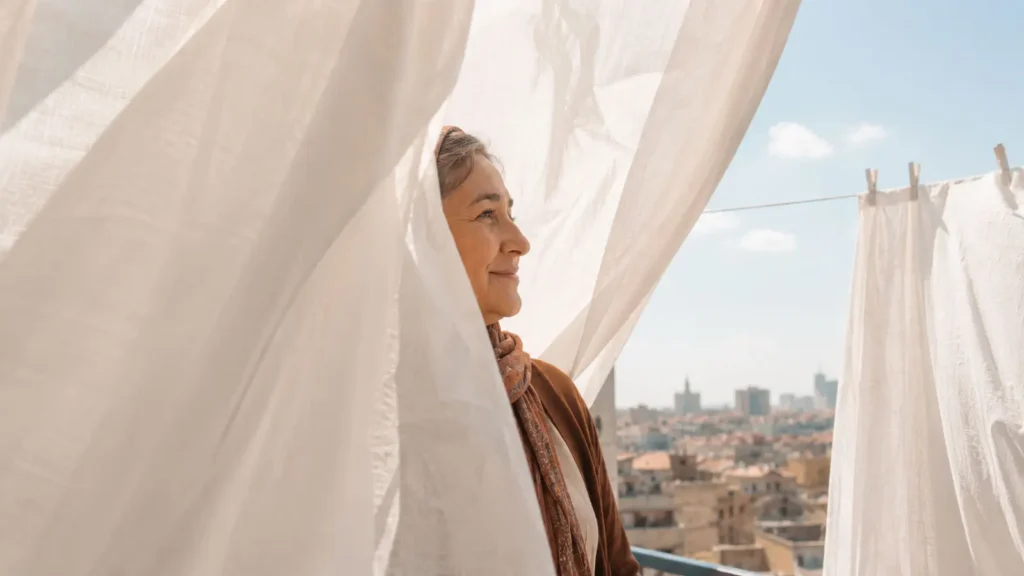
His mother appeared and disappeared behind it.
Watching that movement, Barış thought—
what he wanted to know was not only his father’s work.
Not only what he had done.
He wanted to know how the man had lived.
But that would not end with a single answer.
Emine lifted the laundry basket.
And before going back inside, she spoke once more.
“You’re like him. That’s why you rush.”
The words were not tender.
Not comfort either.
They simply fell, quietly, somewhere deep inside him.
Rush.
Maybe she was right.
He could no longer bear standing still inside something without an answer.
But if his father had been the same kind of man—
Barış looked up at the white cloth moving in the wind.
He could not see what was on the other side.
But he knew the sky was there.
And maybe that alone was enough
to make a person keep moving forward.